In a marketplace, you have several independent sellers who all operate under the same platform. In WooCommerce, these sellers are known as WooCommerce product vendors. Each vendor brings their own catalog, pricing strategy, and customer approach. This gives the marketplace more variety and more potential for sales. However, it also means the marketplace owner must know how to support vendors so they can succeed.
💡 New to this? Start here: what a product vendor is.
An estimated 2.86 billion people will shop online globally this 2026, showing how widespread online buying has become. Because of this growth, vendor management becomes important. When vendors are supported properly, they list better products, ship orders faster, and bring in more customers through their own marketing. This also creates a healthy cycle for the marketplace. It makes the marketplace more attractive to new vendors seeking channels where they do not need to start from zero.
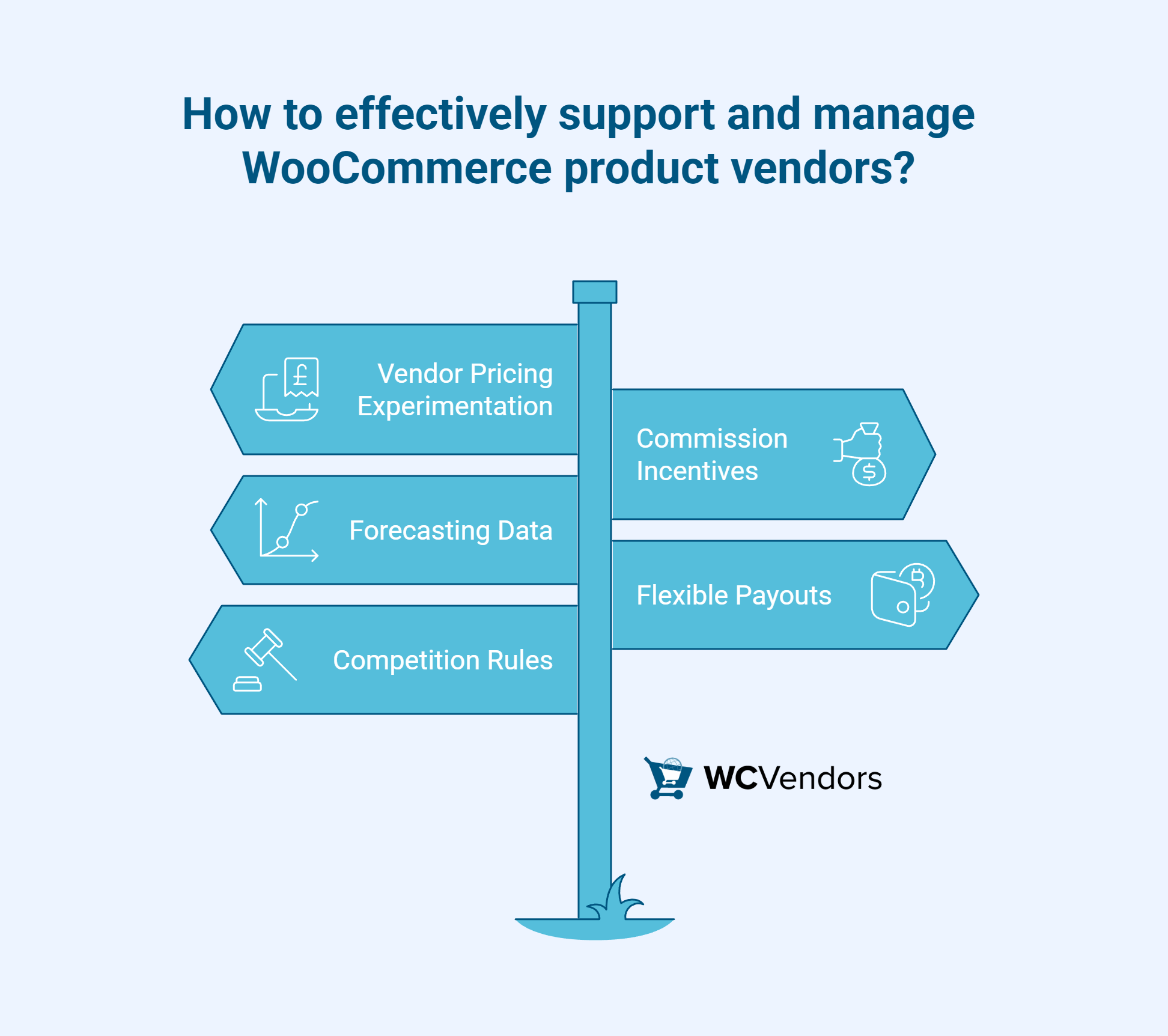
In this article, I will discuss five simple ways marketplace owners can support and manage WooCommerce product vendors. By understanding how these parts work together, marketplace owners can build a more sustainable selling environment without needing to control every part of the vendor workflow.
Ready? Alright, let’s begin!
I. Let Vendors Experiment With Pricing Without Admin Bottlenecks

When vendors can adjust their prices without waiting for the marketplace owner, they can respond more quickly to customers, seasons, and competition. At the same time, it removes unnecessary work for the marketplace owner because they do not need to approve every pricing change.
Dynamic pricing freedom
Each vendor uses different pricing strategies. In a marketplace with WooCommerce product vendors, this flexibility helps vendors figure out what works for their target audience. It also allows vendors to test price changes during holidays, clearance periods, or slower sales cycles. Without pricing freedom, vendors might feel stuck waiting for admin approval, which can slow down sales momentum.
Promotions that fit vendor strategy
Promotions can make a huge difference in how products perform. Vendors often run promotions that align with their goals, such as increasing traffic, moving slow-moving stock, or attracting first-time buyers. Vendor-side promotions may include coupons, bundles, free shipping thresholds, or timed discounts for special events. When vendors can run promotions freely, the marketplace becomes more active. Buyers also get more reasons to browse and compare products across different sellers.
Admin guardrails
Even though pricing flexibility is valuable, the marketplace owner still needs control over the system. Admin guardrails help prevent issues such as discount abuse or extreme price dumping. For example, the marketplace owner may set minimum product prices or decide whether vendors can create their own coupons. These rules protect the larger marketplace economy while still giving vendors enough freedom to compete fairly. This balance keeps friction low for both sides.
II. Use Commissions As Incentives For Marketplace Behavior

When commissions are handled in a fair and transparent way, vendors feel confident selling on the platform because they understand how much they will earn from each sale.
Percentage vs flat commissions
Marketplace owners have different ways of charging commissions. A common setup uses a percentage commission. This means the marketplace takes a percentage of the vendor’s sale. Another setup uses a flat fee, in which the marketplace charges a fixed amount for each order. Some marketplace owners even combine both, depending on the vendor type or product category.
In setups with WooCommerce product vendors, percentage commissions can work well for higher-priced items while flat commissions may fit lower-priced goods. Each model sends a different message about how vendors should price their products and how they should position their items within the marketplace.
Category-based commission models
Some product categories bring in higher profits than others. Because of this, marketplaces sometimes set different commission rates per category. For example, electronics may have a higher commission because they often bring in more profit, while handmade crafts may have a lower commission to attract more hobbyist sellers.
Category-based commissions help the marketplace owner shape the marketplace’s overall product mix. If a marketplace needs more product variety in a certain category, commissions can be adjusted in that area to encourage more vendor participation.
Commission transparency builds trust
Commission systems only work well when vendors fully understand how their earnings are calculated. In setups with WooCommerce product vendors, transparency can prevent disputes and can encourage vendors to stay active. Vendors who feel informed and respected are more likely to put effort into growing their product catalog and attracting customers through their own marketing.
For additional information about commissions, you may read “Tiered Commission Mastery: Amazing Advantages And Uses For Your Marketplace.”

III. Give Vendors Forecasting Data For Better Stock Decisions
Product supply and inventory planning are often ignored in the early stages of a marketplace. However, these tasks matter a lot once more vendors join, and more orders begin to flow.
Sales trends and product performance
Sales history can say a lot about what buyers want. Vendors with access to reports can spot patterns in buyer behavior, such as seasonal demand or repeat-item interest. In environments with WooCommerce product vendors, this makes a huge difference because every vendor runs their shop independently. Without data, vendors may reorder stock too late or miss profitable timing windows.
Inventory and supply planning
Inventory planning affects how well vendors can keep up with customer demand. Stockouts often lead to lost sales and sometimes lost customers. Overstock, on the other hand, can increase expenses for vendors who must store or liquidate extra products.
Vendors who have product performance data can predict when they should reorder and how much they should order. This allows vendors to stay ahead during peak periods such as holidays or sale events. The marketplace benefits as well because stockouts create gaps in the product catalog and can send buyers to competing platforms.
Lower returns through better product info
Product returns are often caused by mismatched expectations. Accurate listings can reduce return rates, which protects the vendor and improves the customer experience. Marketplaces that support WooCommerce product vendors often provide reporting tools that show return or refund reasons. Vendors can use this data to adjust their listings and reduce misunderstandings.
IV. Offer Payout Methods That Match Vendor Cash Flow Needs
Cash flow plays a big part in how vendors operate their business. When marketplaces support payout methods that match vendor cash flow needs, everyone benefits.
Payout timing matters
Some marketplaces pay vendors a few days after the customer receives the item, or once delivery is confirmed. There are also marketplaces that pay vendors on a weekly or monthly schedule. Each method has pros and cons. For marketplaces that work with WooCommerce product vendors, predictable payout timing is often the most helpful. Vendors appreciate stability because they can plan expenses ahead of time and avoid unwanted gaps in their cash flow.
Multiple payout options
Different vendors prefer different payout methods. Marketplace owners who offer more payout options give vendors more control over their finances. This flexibility can also attract new vendors who may not have access to one specific payout method in their country. This reduces onboarding friction and makes the marketplace more welcoming for a global vendor base.
Holding periods for refunds and disputes
Refunds and disputes can create complications during payouts. If the marketplace pays vendors too quickly, the vendor may already have the funds by the time a customer requests a refund. This can cause negative balances or force the marketplace to claw back payments.
Holding periods can prevent this issue. A holding period is a short delay applied to payouts so that customer disputes and refunds can be processed first. This system protects the marketplace, the vendor, and the customer. In setups with WooCommerce product vendors, holding periods can reduce disputes about who owes money during refunds and can keep financial workflows cleaner.
V. Create Rules To Prevent Unfair Competition Between Vendors

When there are no rules or when rules are unclear, vendors may compete in ways that damage the marketplace. Marketplace rules protect both buyers and vendors by keeping the selling environment stable and predictable.
Category crowding and price wars
Some categories attract a lot of sellers because they are easy to enter. This can lead to category crowding. When too many vendors compete in the same category, price wars become common. Price wars can harm vendors because they lower margins to unhealthy levels. They can also hurt the marketplace because products begin to lose value and buyers become trained to wait for lower and lower prices.
Category rules can prevent this problem. For instance, the marketplace owner can limit how many vendors sell in a high-demand category or can set minimum pricing rules so that vendors do not undercut each other in extreme ways.
Fulfillment standards
Marketplace owners can set fulfillment expectations so that all vendors follow the same guidelines. These expectations may include order handling time, packaging rules, or return policies. Vendors who follow these standards help the marketplace build a consistent reputation which benefits everyone.
Around half of online shoppers begin their product search on large marketplaces instead of a single brand’s website. This makes marketplace experience and vendor management a key competitive factor. If the experience feels disorganized or unreliable, shoppers will leave and buy from a different platform. When marketplaces have rules to prevent unfair competition, they protect customer trust while helping vendors operate in a stable environment.
How WC Vendors Supports WooCommerce Product Vendors
Marketplace owners need tools that help them support vendors without doing everything by hand. WC Vendors gives marketplace owners a way to manage approvals, payouts, commissions, and vendor capabilities in one system. This keeps the marketplace organized while still letting WooCommerce product vendors run their shop independently.
Here are some of the key ways WC Vendors helps:
- Vendor onboarding and approvals
Vendors can sign up and submit their application for review. The marketplace owner can approve or decline based on their standards. - Role and capability control
The admin can decide what vendors can do inside the platform such as creating coupons, editing listings, or publishing products. - Commission and payout handling
Commissions are calculated at checkout and payout schedules are controlled by the marketplace owner. This prevents math errors and payout disputes. - Vendor dashboard workspace
Vendors get access to their own dashboard where they can manage products, orders, and store settings without asking the admin for help. - Performance visibility
Vendors can view sales history, commission reports, and order details. This reduces vendor confusion and lowers the number of questions sent to support.
📝 WC Vendors also has integrations with plugins like Wholesale Suite. Vendors can set wholesale pricing and offer wholesale-only visibility for their products. This makes it easier for vendors to sell to both regular retail customers and wholesale buyers within the same marketplace. Vendors going after B2B accounts can also put together a wholesale line sheet to give buyers a clean, professional look at their catalog before they register.
Takeaways
Supporting vendors is one of the most overlooked parts of running a multi-vendor marketplace. Many marketplace owners focus only on getting new vendors to sign up. However, vendors need tools, structure, and guidance after onboarding if they are going to succeed. This helps the marketplace grow without the admin doing all the work behind the scenes.
Let’s do a recap on what we have discussed in this article:
- Let vendors experiment with pricing without admin bottlenecks
- Use commissions as incentives for marketplace behavior
- Give vendors forecasting data for better stock decisions
- Offer payout methods that match vendor cash flow needs
- Create rules to prevent unfair competition between vendors
From my experience, marketplaces that support WooCommerce product vendors with a stable payout system and fair competition rules tend to keep vendors longer and attract more serious sellers who want a reliable place to do business.
That is a pretty good way to work together if you ask me. Everyone benefits, and the marketplace becomes easier to run. It’s a sustainable way to grow, don’t you think?
Frequently Asked Questions
Why is pricing freedom important for WooCommerce product vendors?
Pricing freedom allows vendors to adjust product prices based on demand, season, and competition. This makes it easier for vendors to run promotions and attract buyers without waiting for admin approval.
What kind of data helps vendors make better decisions?
Sales reports, order history, refund reasons, and stock performance data help vendors plan inventory. This also reduces stockouts and return issues for the marketplace.
Why does the marketplace owner need rules for vendor competition?
Rules prevent price wars, poor product listings, slow shipping, and unfair competition. These problems can drive customers away and make the marketplace harder to manage.
Can WooCommerce product vendors run promotions?
Yes. Vendors can run promotions if the admin allows it. Promotions may include coupons, bundles, or event-based discounts. This helps vendors move inventory and attract new customers.