A marketplace business model is a setup where one platform connects buyers and sellers instead of selling products directly. Think of it as a space where different sellers can list their products or services while the platform handles the structure behind the scenes. This approach is common in an online marketplace because it allows many sellers to operate under one brand without the platform owning inventory.
In this guide, we will talk about what a marketplace business model really is, how it compares to a traditional store, and the different types of marketplaces you can build. We will also explain how marketplaces make money, the common challenges store owners face, and how tools like WC Vendors support a growing marketplace business. By the end, you should have a clear idea of whether this marketplace business model fits your long-term plans.
What Is A Marketplace Business Model?
A marketplace business model is a way of running a platform where multiple sellers offer products or services to customers in one shared space. Instead of the platform selling items itself, it allows sellers to list what they offer while the platform manages the system that connects everyone. This setup is common in an online marketplace because it allows growth without the platform needing to handle inventory.
At its core, this model involves three main roles. First, there are the buyers who visit the platform to browse and purchase items. Second, there are the sellers who provide the products or services. Third, there is the platform owner who runs the marketplace business.

The platform owner sets the rules, manages payments, and keeps the marketplace organized. Sellers focus on listing items, pricing them, and fulfilling orders. Buyers focus on finding what they need and completing purchases.
The platform acts as a middle layer between buyers and sellers. It does not usually own the products, but it controls how transactions happen. This includes handling checkout, collecting payments, and sometimes managing disputes. In return, the platform earns through a revenue model such as commissions, listing fees, or lead fees. Some platforms also offer featured listings that sellers can pay for to gain more visibility inside the marketplace.
This structure works well because each side has a clear role. This balance is why the business model online marketplace approach is widely used in many forms of marketplace business today.
Marketplace Business Model Vs Traditional Online Store
At first glance, a marketplace and a traditional online store may look similar because both allow customers to buy products online. However, once you look at how they operate behind the scenes, the differences become clear. These differences affect how much work the store owner does, how money flows into the business, and how fast the platform can grow. The table below breaks down the main differences so you can see how each setup works in practice.
| Area | Marketplace Business Model | Traditional Online Store |
|---|---|---|
| Product ownership | Products are owned by individual sellers. The platform provides the space for sellers to list and sell their items. | Products are owned by the store owner, who buys, stores, and sells inventory directly. |
| Inventory risk | Low risk for the platform because sellers manage their own stock and unsold items. | High risk for the store owner since unsold inventory and storage costs fall on one business. |
| Operational responsibility | Sellers handle listings, pricing, shipping, and order fulfillment. The platform manages rules, payments, and order flow. | The store owner handles everything, including sourcing, pricing, packaging, shipping, and customer support. |
| Revenue structure | The platform earns through a revenue model such as commissions, a listing fee, a lead fee, or paid options like featured listings. | The store earns by selling products directly and keeping the profit margin. |
| Scalability | Easier to scale because more sellers can join and add products without increasing platform inventory. | Scaling usually requires buying more inventory and managing more operations internally. |
What does this tell you?
After seeing the comparison, it becomes easier to understand why many platforms move toward a marketplace setup. A traditional store puts almost all responsibility on one business. This can work well for small catalogs or niche products, but it can become heavy as the business grows.
From a money perspective, the difference is just as important. A traditional store depends on product margins to stay profitable. A marketplace depends on activity. This is why the business model online marketplace approach works well for platforms that want to scale without owning products themselves.
If you prefer full control and a smaller operation, a traditional store may feel more comfortable. If you want to build a platform where many sellers can grow together, then a marketplace model may be the better direction.
Types Of Marketplace Business Models
Not all marketplaces work the same way. While they all connect buyers and sellers, the structure depends on what is being sold and how sellers interact with customers. Understanding these different types helps store owners choose the right marketplace business model and set realistic expectations for growth, operations, and the revenue model.
Product marketplaces
Product marketplaces focus on physical or digital goods. Sellers list items such as clothing, electronics, handmade products, or digital files. Buyers browse listings, compare prices, and place orders through the platform. Sellers usually manage inventory and shipping, while the platform handles payments and order flow.
This type of online marketplace often earns through commissions, a listing fee, or paid options like featured listings. Some platforms also charge a lead fee when a seller receives a buyer inquiry. Because sellers supply the products, this marketplace business model allows the platform to grow without holding inventory.
You may also read “Exploring Standard Commission Types: Amazing Benefits And Applications For Marketplaces.”

Service marketplaces
Service marketplaces connect customers with people who offer services instead of products. These services may include freelance work, home repairs, lessons, or bookings. Sellers list their skills, availability, and pricing. Buyers select a provider and request or book a service through the platform.
In this marketplace model, inventory is not involved, but trust becomes very important. Reviews, ratings, and clear profiles help buyers decide. The platform usually earns through commissions or subscription fees. Many service platforms become a popular marketplace by focusing on quality control and customer experience.
You may also read: How To Build A Marketplace For Service Bookings Using A WordPress Appointment Scheduling Plugin.
Hybrid marketplaces
Hybrid marketplaces combine products and services on one platform. A seller may offer physical items along with installation, setup, or support services. This setup gives buyers more complete solutions instead of just standalone products.
Running a hybrid marketplace business model requires more planning because product sales and service bookings follow different workflows. However, it also opens more income options and gives sellers room to expand what they offer without leaving the platform.
Peer-to-peer marketplaces
Peer-to-peer marketplaces allow individuals to sell directly to other individuals. These sellers are often not businesses but regular users who want to sell items, rent assets, or offer short-term services. Examples include resale platforms or rental-based marketplaces.
This type of marketplace business relies heavily on trust, user verification, and community rules. The platform earns through commissions, service fees, or optional paid visibility such as featured listings. Peer-to-peer platforms often grow quickly because entry barriers for sellers are low.
Wholesale or B2B marketplaces
Wholesale marketplaces focus on business buyers and sellers instead of individual consumers. Sellers offer bulk pricing, minimum order quantities, and account-based access. Buyers are often retailers or distributors.
This business model online marketplace may earn through commissions, subscriptions, or a listing fee for verified sellers. Because order values are higher, the revenue model is often different from consumer marketplaces. These platforms work well when sellers want repeat buyers and long-term relationships instead of one-time purchases.
You may also read: What Is Freemium Model And Why It’s A Smart Strategy.
How Marketplaces Make Money
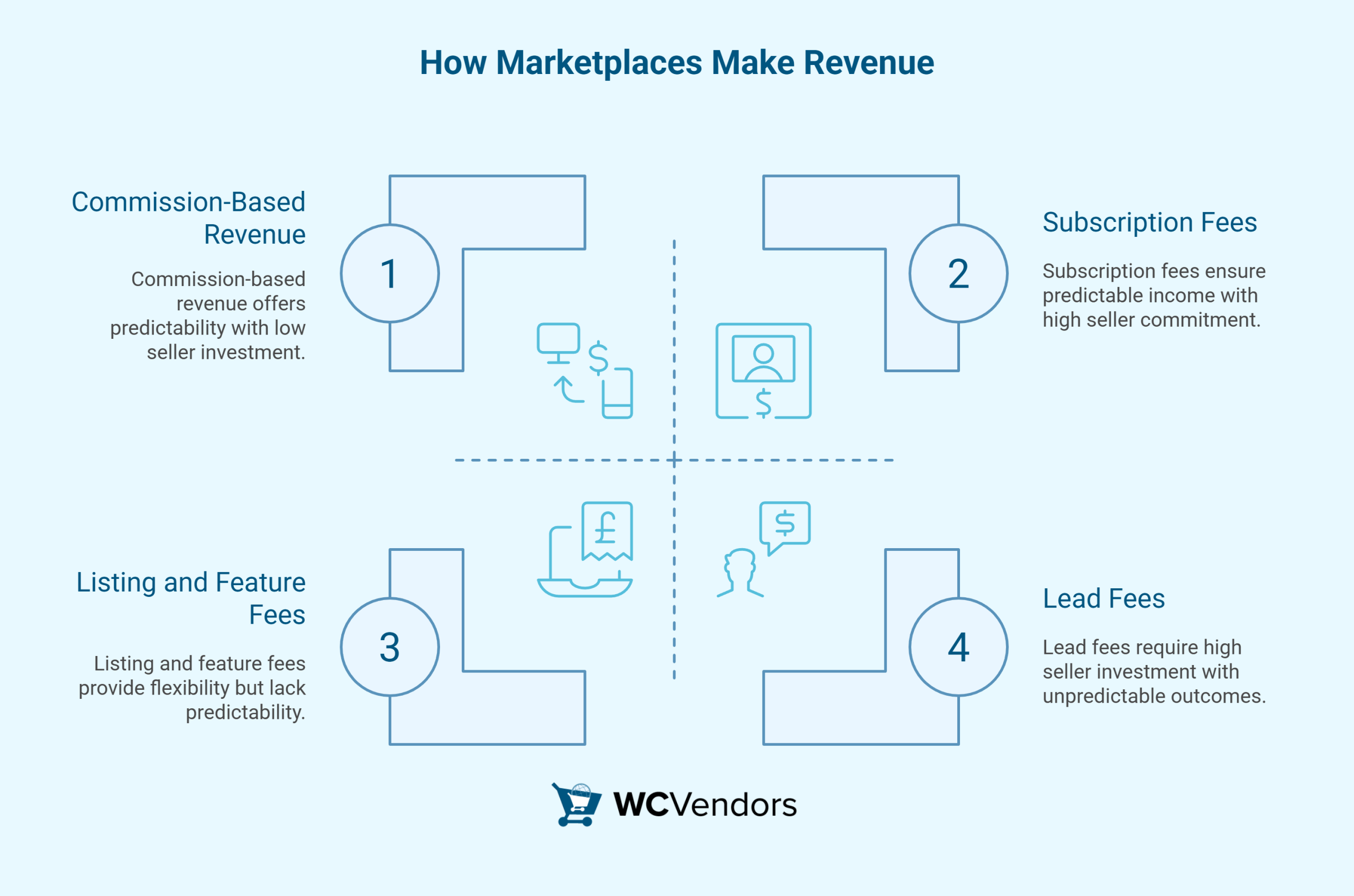
Every marketplace needs a clear way to earn income so it can cover operating costs and continue growing. Unlike a traditional store, a marketplace does not rely on selling products directly. Instead, it earns based on seller activity.
Commission-based revenue
One of the most common ways a marketplace earns money is through commissions. A commission is a percentage or flat amount taken from each completed order. When a seller makes a sale, the platform keeps its share and sends the rest to the seller. This works well because the platform only earns when sellers earn.
In a marketplace business model, commission rates may vary by product category or seller type. Some platforms keep rates simple with one fixed percentage, while others adjust rates based on volume or performance. This method fits many online marketplace setups because it scales naturally as sales increase.
You may also read: Awesome Benefits Commission Levels Offer Marketplaces.

Subscription or vendor fees
Some marketplaces charge sellers a recurring fee to access the platform. This may be a monthly or yearly payment that gives sellers the ability to list products, manage orders, and reach buyers. Subscription fees are common in platforms that focus on professional sellers or wholesale buyers.
This approach gives the marketplace business a predictable income even when sales are slow. It also filters out casual sellers who may not be serious about selling. For sellers, the fee makes sense when the platform provides steady traffic and reliable tools.
Listing and feature fees
Another income source comes from optional seller fees. A listing fee may be charged when a seller posts a product. Some platforms also charge for premium options such as featured listings, better placement in search results, or access to advanced seller tools.
In some setups, sellers pay a lead fee when they receive a qualified buyer inquiry. This works well for service or wholesale marketplaces where direct contact is valuable. These fees allow sellers to choose how much they invest while giving the platform more income options.
Overall, these methods can work together. A marketplace may combine commissions, subscriptions, and optional fees into one balanced revenue model. This flexibility is one reason the business model online marketplace approach works for many different industries.
Challenges Of Running A Marketplace
Running a marketplace can be rewarding, but it also comes with challenges that store owners should understand early on. Because a marketplace depends on many sellers instead of one business, problems can appear in different areas at the same time. Knowing these challenges helps store owners prepare better systems and rules. This makes the marketplace business model easier to manage over time.
Vendor quality control
One of the biggest challenges in a marketplace business is maintaining quality. Sellers may vary in experience, professionalism, and attention to detail. Some may upload unclear product listings or ship orders late. If quality standards are not clear, customers may blame the entire platform instead of one seller. This can hurt trust in the online marketplace. Store owners often need approval rules, listing guidelines, and review systems to keep quality consistent.
Competition between sellers
Competition is natural in a marketplace, but it can turn into a problem when sellers fight over pricing or flood the same category. Price undercutting may push margins too low and discourage serious sellers. Category crowding can also make it harder for buyers to choose. In a marketplace model, store owners usually need rules that protect fair competition. This may include pricing guidelines or limits on how many sellers can list similar products.
Operational complexity
Managing payments, disputes, refunds, and support becomes more complex as the platform grows. Sellers may have different payout schedules, commission rates, or refund policies. Without clear systems, these differences can cause confusion. A growing marketplace business model requires strong tools for tracking orders, handling payouts, and resolving disputes. This keeps sellers informed and customers satisfied.
These challenges do not mean a marketplace is hard to run. They simply show why planning matters. With the right structure, the business model online marketplace approach can remain stable even as more sellers join.
And we just got the perfect solution for you!
How WC Vendors Supports The Marketplace Business Model
WC Vendors helps store owners manage sellers without handling everything manually. It supports the marketplace business model by giving structure to seller activity while allowing sellers to stay independent inside the platform.
Here’s how WC Vendors supports a business model online marketplace:
Vendor onboarding and approvals
Sellers can register and apply to join the marketplace. Store owners can review applications before approval, which helps set expectations early and protect marketplace quality.
Vendor roles and permissions
Store owners can control what sellers are allowed to do. This includes publishing products, managing discounts, or adjusting shipping settings. These controls keep the marketplace business organized while sellers stay active.
Commission and payout handling
WC Vendors supports different commission setups that match the platform’s revenue model. Store owners can define commission rules and payout schedules so sellers understand how and when they get paid.
Vendor dashboards
Sellers get access to their own dashboard where they can manage products, view orders, and track earnings. This reduces confusion and lowers the number of support questions sent to the store owner.
Sales and performance reporting
Sellers can see sales data and commission details. This visibility helps them adjust pricing and product listings inside the online marketplace.
Scalable seller management
As more sellers join, WC Vendors keeps workflows consistent. This makes it easier to grow into a popular marketplace without adding manual work for every new seller.
Overall, WC Vendors supports the marketplace model by balancing seller freedom with platform control. This makes the marketplace business model easier to manage as the platform grows.
Takeaways
A marketplace business model is more than just a way to sell online. Throughout this guide, we walked through how understanding these basics helps store owners see how a marketplace business actually operates behind the scenes.
Let’s do a quick recap:
- What is a marketplace business model
- Marketplace business model vs traditional online store
- Types of marketplace business models
- How marketplaces make money
- Challenges of running a marketplace
- How WC Vendors supports the marketplace business model
Choosing a marketplace business model comes down to how you want your business to run. If you prefer owning products and controlling every detail, a traditional store may be a better fit. If you want to build a platform where many sellers grow together under one system, then the marketplace model can help you achieve that. With the right tools, clear rules, and realistic planning, a marketplace business model can support steady growth and long-term stability. That sounds like a solid way to work together, doesn’t it?
Frequently Asked Questions
Is a marketplace business model good for beginners?
It can be, but beginners should plan carefully. Running a marketplace means managing sellers, payouts, and rules instead of just products.
What is a lead fee in a marketplace business?
A lead fee is charged when a seller receives a qualified customer inquiry. This is common in service and wholesale marketplaces where direct contact matters.
What is a listing fee?
A listing fee is a charge for posting a product or service on the platform. Some marketplaces charge it per item, while others bundle it into seller plans.
Are featured listings worth it for sellers?
Featured listings can help sellers get more visibility inside a popular marketplace. They work best when buyers browse many similar products and need help finding options faster.
Is a marketplace business model right for every store owner?
No. Some store owners prefer full control over products and branding. A marketplace model works best for entrepreneurs who want to manage a platform and support multiple sellers.