Each person or business brings something new to your catalog. Some join with great ideas. Some arrive with ten questions before they even upload a product. This is why it helps to understand the types of vendors you might work with as your marketplace grows.
Many marketplace owners start with a small group of sellers. At first, everything feels light and easy. Later, you begin to notice that each seller has their own style. You might also meet sellers who offer services instead of products, which adds a new twist to your routine.
As you read this guide, you will see how different vendor groups behave inside a WooCommerce marketplace. You will also see how their roles shape your daily work as a marketplace owner.
Without further ado, let’s discuss them one by one.
Vendors In A Multi-Vendor Marketplace
A vendor is someone who lists products or services on your platform. They have their own products, pricing, and order handling systems. You give them a place to sell, and they handle most of the work related to their shop. This setup helps your catalog grow faster because you do not have to create every listing yourself.
Difference between “vendor,” “seller,” and “merchant”
These three words may look the same, yet they do not always mean the same thing once you run a marketplace. A seller is anyone who offers an item to a buyer. A seller can be a student with a few handmade bracelets or a parent who wants to sell old toys. The word is very broad, so it covers almost anyone who tries to make a sale.
A merchant is a bit different. A merchant is usually a business that has a clear system for payments, stock, and customer service. They often follow set rules for handling returns and pricing. They think in batches, schedules, and daily tasks.
A vendor can be a single person or a full business. In a marketplace, the term “vendor” feels more natural because everyone shares the same selling space. When you say “vendor,” you talk about someone who uses your marketplace tools, follows your rules, and has a role inside your platform. They list products, track orders, and talk to buyers through your setup.
Types Of Vendors You Will Work With
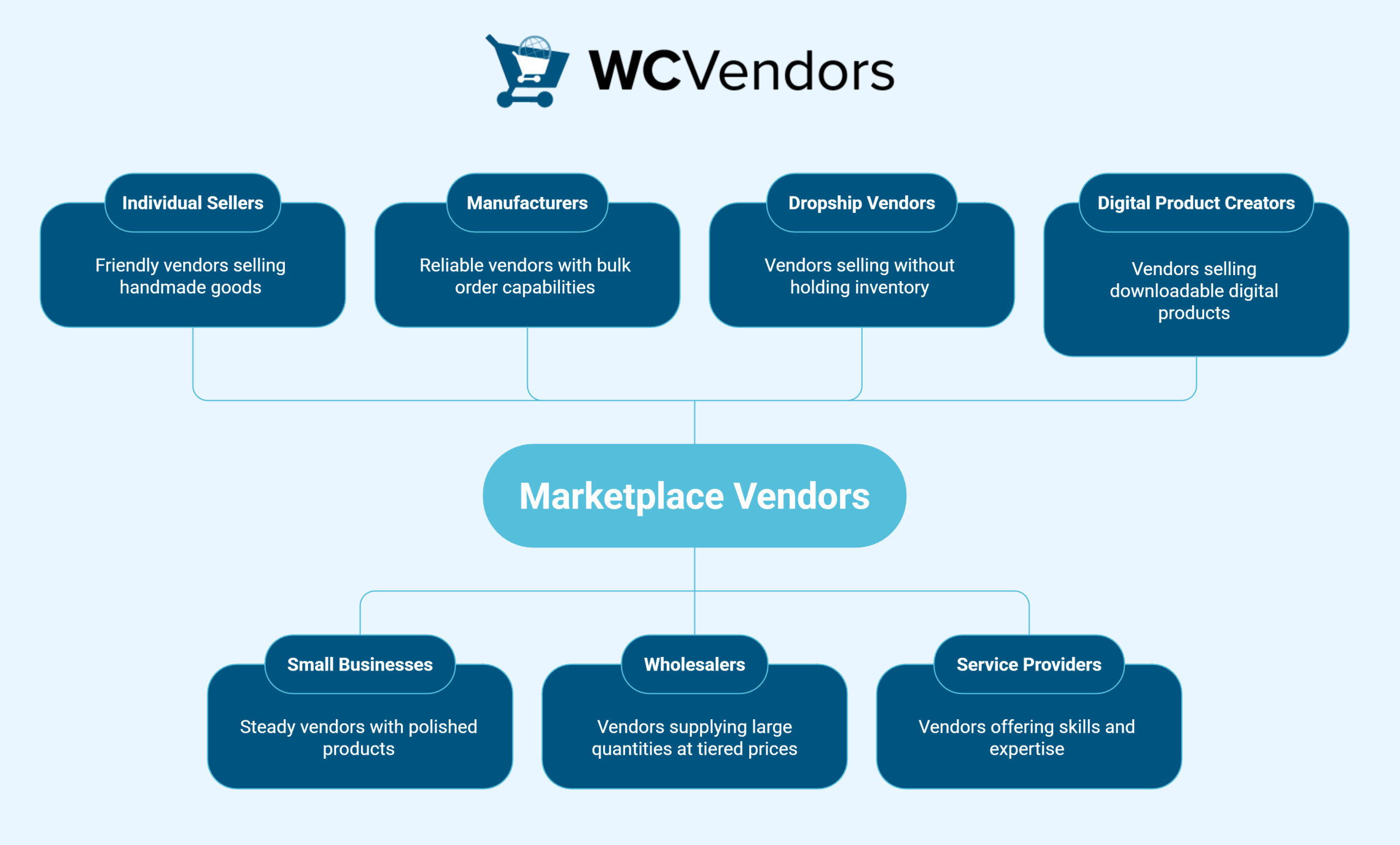
When you run a marketplace, you deal with many sellers who move in different ways. This is why it helps to understand the common types of vendors you will meet. Each group has its own habits, its own pace, and its own way of asking for help. When you know how these types of vendors behave, your job becomes easier, and your marketplace feels more organized.
1. Individual sellers
Who they are: Individual sellers are the friendliest types of vendors you will meet. They often join with a small batch of items and a lot of excitement. They enjoy testing ideas inside your marketplace because they work at their own pace.
What they usually sell: They sell handmade goods, crafts, bracelets, printed art, or small hobby projects. Their items change often, which helps your catalog feel fresh. Many buyers enjoy this because they like finding unique pieces from these types of vendors.
Typical challenges: Since they do not have a team to double-check their work, they might message you more often than other types of vendors. This is normal because they learn as they go, and they rely heavily on your guidance during their first few months.
Marketplace features that help them succeed: A clear marketplace dashboard can do wonders for new sellers. If the product fields are easy to follow and the shipping tools are not confusing, these types of vendors feel supported and remain active for longer.
2. Small businesses
Strengths and limitations: Small businesses bring steady products and better branding. They understand basic sales routines and often respond to buyer questions faster than smaller vendors.
Common product categories: They sell home items, clothing, beauty products, and pet supplies. Their items look polished because they already follow a fixed style.
Support they likely need: They may ask for help with coupons, bulk edits, or advanced shipping rules. These types of vendors grow fast when you give them the right tools.
3. Manufacturers
Benefits of working with direct makers: Manufacturers create the products themselves. This means they bring steady stock, clear product details, and a smooth process for large orders. Many marketplace owners prefer these types of vendors when they want reliable items.
Quality control expectations: Manufacturers follow their own checks to catch defects. They are used to handling returns with more structure.
How they handle inventory and bulk orders: They manage large stock levels and can adjust when demand rises. Among all types of vendors, they handle bulk orders the best.
4. Wholesalers
Their role in supplying large quantities: Wholesalers help your marketplace quickly build a wide product selection. They add many products at once and keep stock levels high.
Pricing structures: They use tiered pricing and offer lower rates when buyers order more. This helps you attract shoppers who want to save with bigger purchases.
How to integrate them smoothly: Wholesalers work best with bulk upload tools, clear order notes, and fast communication.
📝 Note: Vendors can add wholesale prices to their products via the Vendor Dashboard > Products > Edit > General Tab, where new wholesale price fields are available for different customer roles.
You may also read: How You Can Enable Wholesale Prices With Wholesale Suite Integration in WC Vendors.
5. Dropship vendors
How dropship vendors operate: They sell products without holding the items themselves. When someone places an order, they pass the request to their supplier. The supplier ships the product.
Common issues with inventory and fulfillment: Since they rely on a third party, stock changes faster. They might also face late shipping when suppliers slow down.
Tools they need within a WooCommerce marketplace: tracking updates, stock sync, and easy product imports help these types of vendors function more effectively.
6. Service providers
Examples: consulting, coaching, creative services
Service providers offer skills instead of items. They might teach lessons, design graphics, or guide clients through sessions.
How service vendors differ from product sellers: They need booking tools and clear schedules rather than stock tools. They communicate with buyers differently because there is no package to ship.
Booking, scheduling, and delivery considerations: They need calendars, reminders, and a way to deliver files or reports on time.
You may also read: How To Build A Marketplace For Service Bookings Using A WordPress Appointment Scheduling Plugin.
7. Digital product creators
Digital creators are one of the easiest types of vendors to manage because they do not deal with shipping or physical stock.
What they sell: downloads, courses, templates, licenses
They upload e-books, art, templates, software keys, music, or training videos. Buyers get access right after checkout.
Easy fulfillment but strict quality expectations: Buyers expect clean files, clear directions, and working download links.
Tools that support licensing and file delivery: Secure downloads, update tools, and file limits help these sellers stay organized.
Choosing The Right Vendor Mix For Your Marketplace
Once your marketplace starts to grow, you will notice that not every seller fits the same goal. This is where choosing the right mix matters. When you understand which types of vendors work well together, you can guide your marketplace in the direction you want. Here’s how you can do it:
Match vendor types to your niche
Your niche should always come first. A fashion marketplace works best with individual sellers and small brands because style and variety matter. An electronics marketplace often works better with manufacturers and wholesalers because buyers expect steady stock and clear specs. A service-based marketplace needs providers who can manage schedules and communication. Digital marketplaces do well with creators who sell files, courses, or licenses. So, make sure the vendors you let into your marketplace perfectly fit the niche you’re in.
You may also read: 8 Powerful Niche ECommerce Ideas For Your Multi-Vendor Marketplace.
When to prefer individual sellers vs wholesalers vs manufacturers
Individual sellers work well when you want unique items that feel personal. They are great for handmade goods or limited runs. Wholesalers are better when your goal is volume and repeat purchases. Manufacturers are a strong choice when you want consistent quality and the ability to handle large orders. Each option serves a different purpose, so picking the right ones depends on how you want buyers to shop inside your marketplace.
Balance product quality and variety
Variety matters, but too much of the same product can feel overwhelming. If five vendors sell nearly identical items, buyers may leave without making a purchase because of decision fatigue. At the same time, strict control can limit choice. A healthy balance gives buyers options without confusion. Among all types of vendors, the ones that follow clear quality guidelines help your marketplace feel more organized.
Scale with vendors who match your goals
If your goal is quick catalog expansion, vendors with bulk uploads and ready stock are more inclined to work with you. If your goal is a curated marketplace, fewer vendors with clear standards may work better. The key is picking vendors who support your long-term plans rather than creating extra work.
How WC Vendors Supports All Vendor Types
WC Vendors empowers your marketplace by giving you tools that adjust to real selling habits. Whether vendors sell physical products, digital files, or services, you can manage different types of vendors without rebuilding your setup every time someone new joins.
Flexible product management
Vendors can manage physical items, variations, downloads, bookings, subscriptions, and services from one dashboard. This works well for marketplaces that mix products and services. Vendors only see what they need, which helps them move faster and make fewer mistakes.
Customizable commissions for every vendor type
WC Vendors lets you set commissions by percentage, fixed amount, category, or vendor role. This works when vendors sell different product types or handle shipping in different ways. You can also change commissions as vendors grow. This keeps things fair across different types of vendors.
Vendor dashboards that fit different workflows
New vendors get a clear flow for products and orders. Experienced vendors can work faster with bulk tools and order views. Sellers with large inventories and digital creators both get tools that match their workflows.
Shipping and fulfillment controls
Vendors manage their own shipping methods, rates, and regions. They can offer local pickup or set location-based pricing. Clear shipping rules help buyers understand costs before checkout and reduce delivery questions.
Role-based permissions
You control what vendors can access. New sellers can start with limited features, while advanced vendors unlock more tools over time. This setup works well for marketplaces that sell products, services, and digital goods together.
Conclusion
The success of a marketplace often depends on the people selling inside it. When you understand how different sellers operate, your decisions become more strategic and intentional. You spend less time reacting and more time planning what comes next.
In this article, we discussed the types of vendors that you can classify in your marketplace:
- Individual sellers
- Small businesses
- Manufacturers
- Wholesalers
- Dropship vendors
- Service providers
- Digital product creators
Clear rules and consistent communication guide how vendors operate over time. When the vendor mix is well thought out, buyers find what they need more easily, and marketplace owners spend less time resolving issues. With the right tools and a structured approach, managing vendors becomes a steady process that supports long-term marketplace growth.
Frequently Asked Questions
Can a marketplace support both physical and digital sellers?
Yes. A single marketplace can support physical products, digital downloads, and services at the same time. The key is having tools that handle inventory, file delivery, and scheduling based on what each seller offers.
Do all vendors need the same features to sell successfully?
No. Vendors sell in different ways. A seller shipping physical products needs inventory and delivery settings, while a service provider needs booking and scheduling options. Giving each vendor only what they actually need helps them stay focused and work better.
Can service-based sellers work inside a WooCommerce marketplace?
Yes. Service sellers can offer consulting, coaching, or creative work. They usually need scheduling tools and clear communication instead of shipping options.
How do marketplace owners maintain quality across different sellers?
Quality comes from clear guidelines, regular reviews, and ongoing communication. When expectations are clear, vendors adjust their behavior over time.
Is it possible to grow a marketplace without adding too many vendors?
Yes. Growth does not always mean adding more sellers. It can also come from working closely with reliable vendors and expanding product depth instead of size.