
Online marketplaces continue to grow each year. More people are learning how to sell products without building their own websites. Instead, they join marketplaces and share the space with other sellers. This setup helps vendors reach customers faster. However, it also means they need ways to stand out, compete, and encourage shoppers to buy from them. One helpful tool vendors often use is vendor coupons.
This article will explain how vendor coupons work inside a multi-vendor marketplace. You will learn how they compare to admin-created coupons, why they matter for growth, how they affect commissions, and how WC Vendors handles them in a simple and practical way.
Let’s begin!
What Are Vendor Coupons In A Marketplace?
Vendor coupons are discount codes that vendors create inside a multi-vendor marketplace. Buyers can use these codes during checkout to lower the price of the vendor’s own products. It gives vendors a direct way to attract customers without waiting for help from the marketplace owner.

Online shopping has become such a normal part of everyday life. In global e-commerce sales, roughly 2.8 billion people are projected to make online purchases this year. These numbers show how many potential buyers are now browsing and comparing products online. Because of this massive growth, shoppers have become more selective. They often wait for the right moment to buy. Vendor coupons can influence this moment and help convert hesitant shoppers into paying customers.
Vendor coupons differ from platform-wide coupons that apply to every product. Platform-wide discounts are controlled by the admin and affect the entire marketplace. Vendor coupons only affect the seller who created them. This difference affects how promotions influence commissions, vendor earnings, and overall marketplace economics.
We will explain these differences in the next section.
Vendor Coupons Vs Admin Coupons: Key Differences
In a multi-vendor marketplace, there are two main types of discounts that can appear on the store: vendor coupons and admin coupons. At first glance, they might look similar because both offer price reductions during checkout. However, their origins, scope, and payout effects are completely different. Understanding how each one works helps both vendors and marketplace owners decide which type of discount is more suitable for certain situations.
Vendor coupons are controlled by the seller. They apply only to the vendor’s own products and do not affect other shops in the marketplace. Admin coupons are controlled by the marketplace owner. They apply to any product in the store as long as the admin chooses to include it. This makes admin coupons better for platform-wide campaigns such as seasonal sales or holiday promotions where every buyer gets the same experience. Vendor coupons are more personal. They are designed to help a specific vendor attract attention, handle slow inventory, or convert new customers.
Below is a simple comparison to make the distinction clear.
| Criteria | Vendor Coupons | Admin Coupons |
|---|---|---|
| Who Creates | Vendors | Marketplace Admin |
| Scope | Vendor’s own products | Entire marketplace |
| Who Funds Discount | Vendor | Admin |
| Impact on Commission | Discount deducted before vendor payout (common) | No impact on vendor payout |
| Approval Needed | Optional (depends on rules) | Not applicable |
| Use Case | Vendor promos and acquisition | Seasonal marketplace promos |
| Control Level | High vendor autonomy | Centralized admin control |
Who pays for the discount
Vendor coupons come out of the vendor’s own earnings. Since the vendor is offering a discount on its own products, it makes sense for the vendor to fund the price reduction. Admin coupons are funded by the marketplace owner. They often do this when they want to increase platform activity or promote events that involve all vendors at once.
Commission implications
Vendor coupons also change how commission calculations work. Since the discount reduces the price of the vendor’s product, the vendor’s payout can go down as well. Marketplace owners protect their earnings by applying commission calculations after the discount, so their share is not affected. Admin coupons do not reduce the vendor’s payout because they do not change the base product price. This difference matters for both sides.
Operational flexibility
Vendor coupons allow sellers to react quickly to trends, price sensitivity, or feedback from customers. Admin coupons are better suited for situations where the marketplace owner wants consistent pricing behavior across all shops.
Why Vendor Coupons Matter For Marketplace Growth
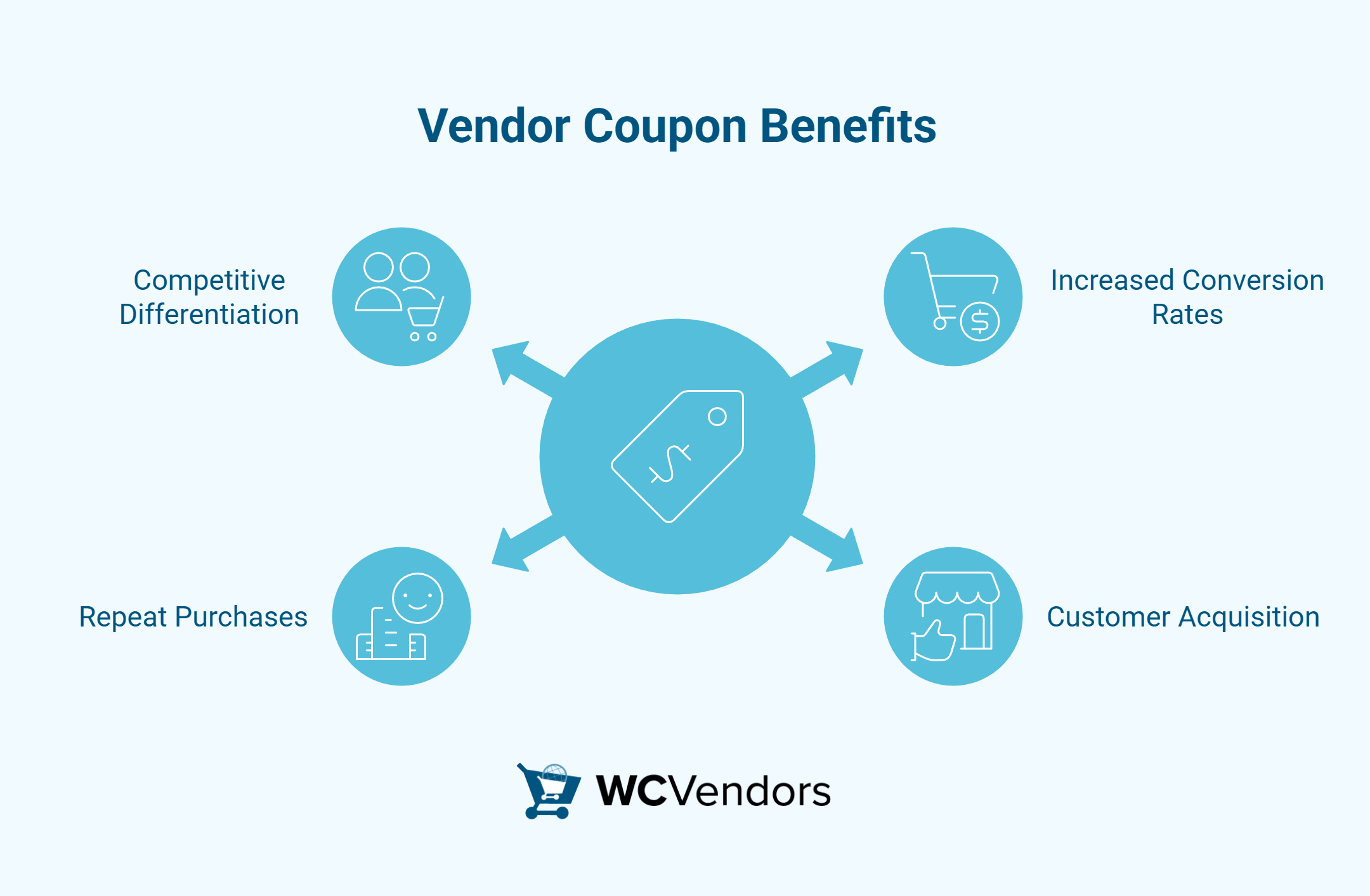
Increased conversion rates
Many shoppers visit product pages without buying on the first visit. They may need time to think or compare prices. Vendor coupons help shorten that waiting period. Customers feel more confident placing an order when they know they are getting a better price.
Studies also show how common this behavior is. More than 90 percent of shoppers have used a coupon at least once while shopping online, which means discounts are not a rare buying trigger. They are already part of normal shopping habits for a lot of people.
In addition, digital coupon formats are effective at turning interest into real orders. Redemption rates in e-commerce can reach around 7 percent or higher for digital offers, showing that many buyers are willing to take action once a discount is presented to them.
Customer acquisition
Vendor coupons also help new sellers stand out in marketplaces. New vendors often join platforms where older shops already have ratings, reviews, and a customer base. This can make the early stage feel slow. A temporary discount can give new vendors a way to attract their first batch of customers. Instead of waiting months for natural discovery, vendor coupons help speed up early engagement without asking the admin to run special marketing campaigns for each seller.
Repeat purchases and retention
Customers who have already bought once are more likely to buy again if given a small incentive. Vendor coupons can act as a gentle nudge for a second order. They can also support loyalty strategies. Some vendors offer codes only to returning customers. Others tie them to future order amounts. The end goal is to make buyers return and shop again. A marketplace with higher repeat purchase activity tends to be more stable because vendors keep earning and customers keep finding value in the platform.
Competitive differentiation
Vendor coupons give sellers a way to compete without forcing a large price war across the whole marketplace. A global platform-wide discount might cut into earnings for everyone, especially when the admin funds it. Vendor coupons allow each seller to make their own strategic decisions. One vendor might offer an introductory code for new customers. Another might run a short seasonal promo. Others might reward buyers who spend above a certain amount. Each vendor controls their own strategy without disrupting how other shops price their items.
How WC Vendors Handles Vendor Coupons
WC Vendors gives sellers the ability to create and manage their own coupons without waiting for the marketplace owner to set things up for them. Vendors get the flexibility to handle their own promotions. Marketplace owners maintain the rules, permissions, and commission structures that protect their platform. This section explains how the system works from both sides.
Vendor-side coupon creation
Vendors can create coupons from their dashboard. Here is a summarized version of how it works:
Step 1 — Access the Coupons tab
Log in to your vendor dashboard and open the Coupons tab.
Step 2 — Add a new coupon
Click the Add Coupon button to start the setup.
Step 3 — Select discount type
Choose the coupon code and description, then pick the discount type, such as percentage or fixed amount.
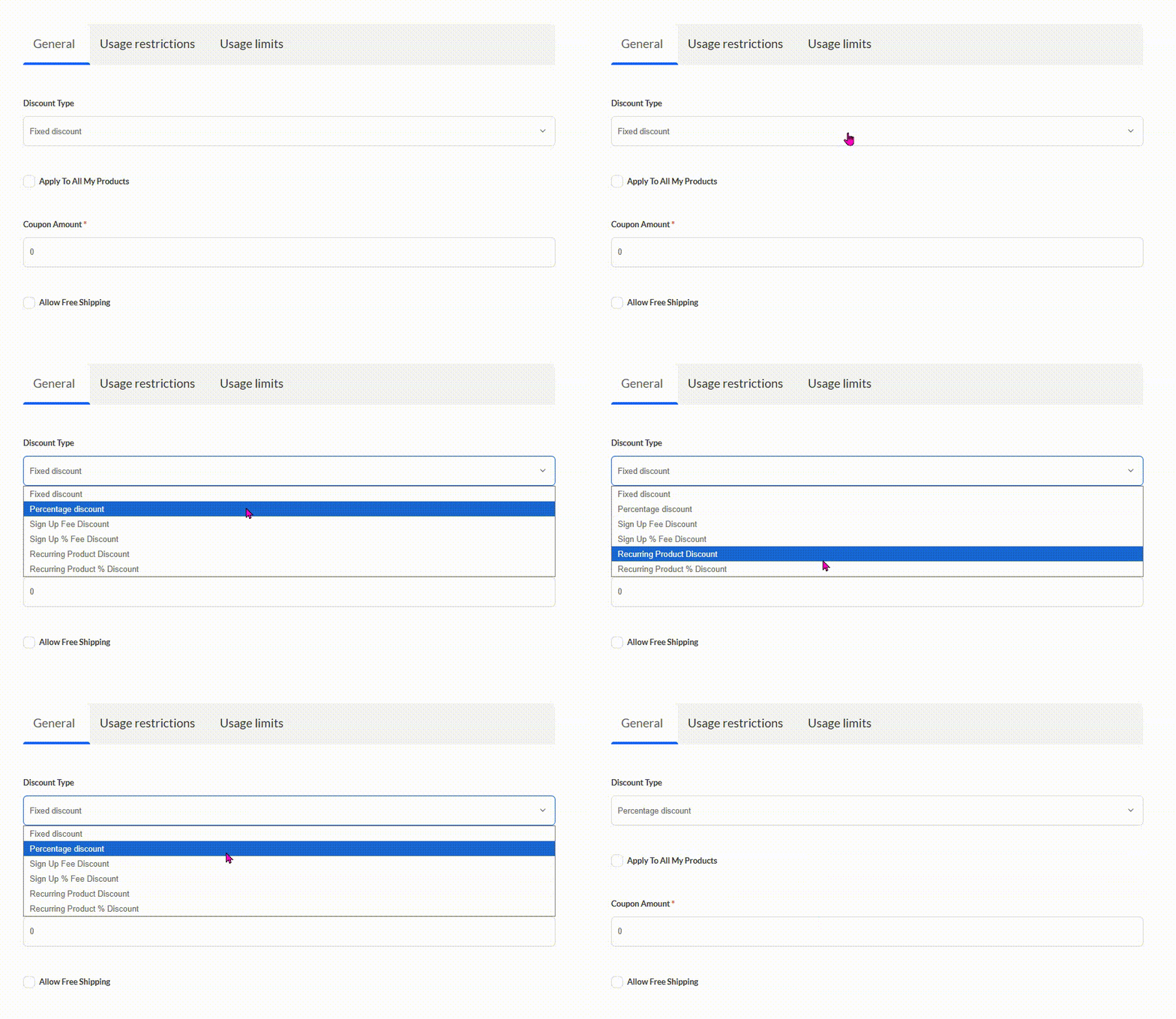
Step 4 — Set discount value, add limits and expiry
Enter the discount the buyer will receive at checkout. You can also add a time limit and usage cap.
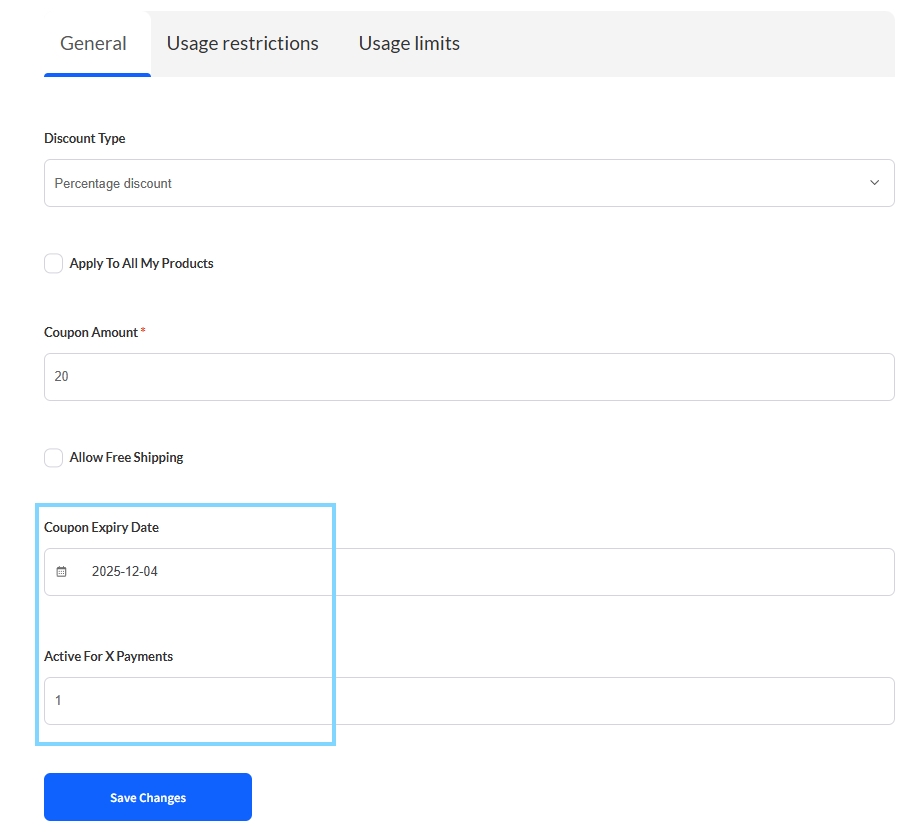
Once saved, the coupon becomes active and ready to use. Vendors can edit or delete coupons as needed.
Admin control over permissions
Even though vendors can create their own coupons, the marketplace owner is still in charge of the rules. The admin can decide whether vendors are allowed to use coupons at all. They can also decide which coupon types vendors can access. This protects the marketplace from random or excessive discounting while still giving vendors enough freedom to compete.
Commission logic management
WC Vendors calculates commissions in a way that keeps marketplace earnings stable. When a buyer uses a vendor coupon, the discount applies to the vendor’s portion of the sale. The commission is calculated in a way that does not reduce the admin’s earnings. This protects the platform from margin issues while allowing vendors to run promotions.
Expirations, usage limits, and parameters
The coupon system includes guardrails to prevent misuse. Vendors can only apply coupons to their own products. They must choose how long the promotion lasts and how many times buyers can use it. These rules make sure coupons do not run forever or affect products that were not meant to be discounted.
Unified monitoring and transparency
Marketplace owners can view all vendor coupons from a central area. This lets them keep an eye on discount behavior at any time. If something needs to be adjusted, the admin has full visibility to make informed decisions. This keeps the platform healthy while maintaining a positive relationship between the admin and the vendors.
📝 Some vendors who want extra coupon features can use Advanced Coupons. Tools like these add more options such as buy-one-get-one deals, gift cards, and loyalty-style rewards. These can work together with vendor coupons if the marketplace setup supports it. However, each marketplace owner still decides which coupon tools to allow because every platform has different rules about commission and payouts. You can read more about it HERE.
Other Related Articles


Conclusion
Vendor coupons may seem like a small feature inside a multi-vendor marketplace, but they play a big part in how sales activity flows between vendors, customers, and the marketplace owner. Discounts help customers make buying decisions faster, and they help new vendors find their first customers without waiting for the admin to coordinate promotions for them.
Here’s a breakdown of what we have discussed so far:
- What are vendor coupons in a marketplace?
- Vendor coupons vs admin coupons: key differences
- Why vendor coupons matter for marketplace growth
- How WC Vendors handles vendor coupons
From experience, marketplaces that allow vendors to control their own promotions often see more movement in their product catalog. Vendors become more involved in growing their own shops and they learn what types of offers work best for their customers.
At the end of the day, vendor coupons work best when everyone understands their role. Vendor coupons give vendors the control they need while keeping the marketplace healthy for the long run.
Frequently Asked Questions
Do vendor coupons reduce the marketplace commission?
No. In most marketplaces, the commission is calculated after the discount. This prevents the platform’s earnings from being reduced when vendors run promotions.
Who funds vendor coupons?
The vendor funds the discount since the reduced price comes from their own product listings. Admin coupons are funded by the marketplace owner.
Can the marketplace owner control how vendor coupons are used?
Yes. The marketplace owner can turn the feature on or off. They can also set limits on coupon types, usage rules, and commission behavior.
Can vendor coupons run forever?
They should not. Most marketplaces require expiration dates and usage limits. These rules prevent abuse and keep the promotions under control.
Is it hard for vendors to create coupons?
No. In platforms like WC Vendors, vendors can create and manage coupons from their own dashboard. The process does not require technical skills.