
When you run a marketplace, you notice patterns in how customers shop. Some buyers move quickly from one product to another, while others take their time and compare every detail. A vendor discount gives them a simple way to do that. It creates a small price change that can shift a buyer’s decision. When this tool is used with the right timing, it supports a steadier flow of interest across the marketplace.
What Is A Vendor Discount?
A vendor discount is a simple price reduction offered by a vendor on its own products. The whole marketplace does not control it. Instead, the vendor decides when to use it and how long it should stay active. This gives vendors a direct way to influence how buyers notice their items. It also helps buyers feel like they are getting a better deal without waiting for a major sale across the entire site. The idea is to give vendors some flexibility so they can adjust prices based on their own goals or circumstances.
How vendor discounts differ from store-wide coupons
Store-wide coupons apply to every product in the marketplace. They are created by the marketplace owner and offered to all buyers at the same time. However, a vendor discount works differently. It applies only to the products sold by that vendor. This means each vendor can create a plan that fits their own style. The key idea is that the vendor controls the discount and uses it based on what they think will help their sales.
Common Types Of Vendor Discounts
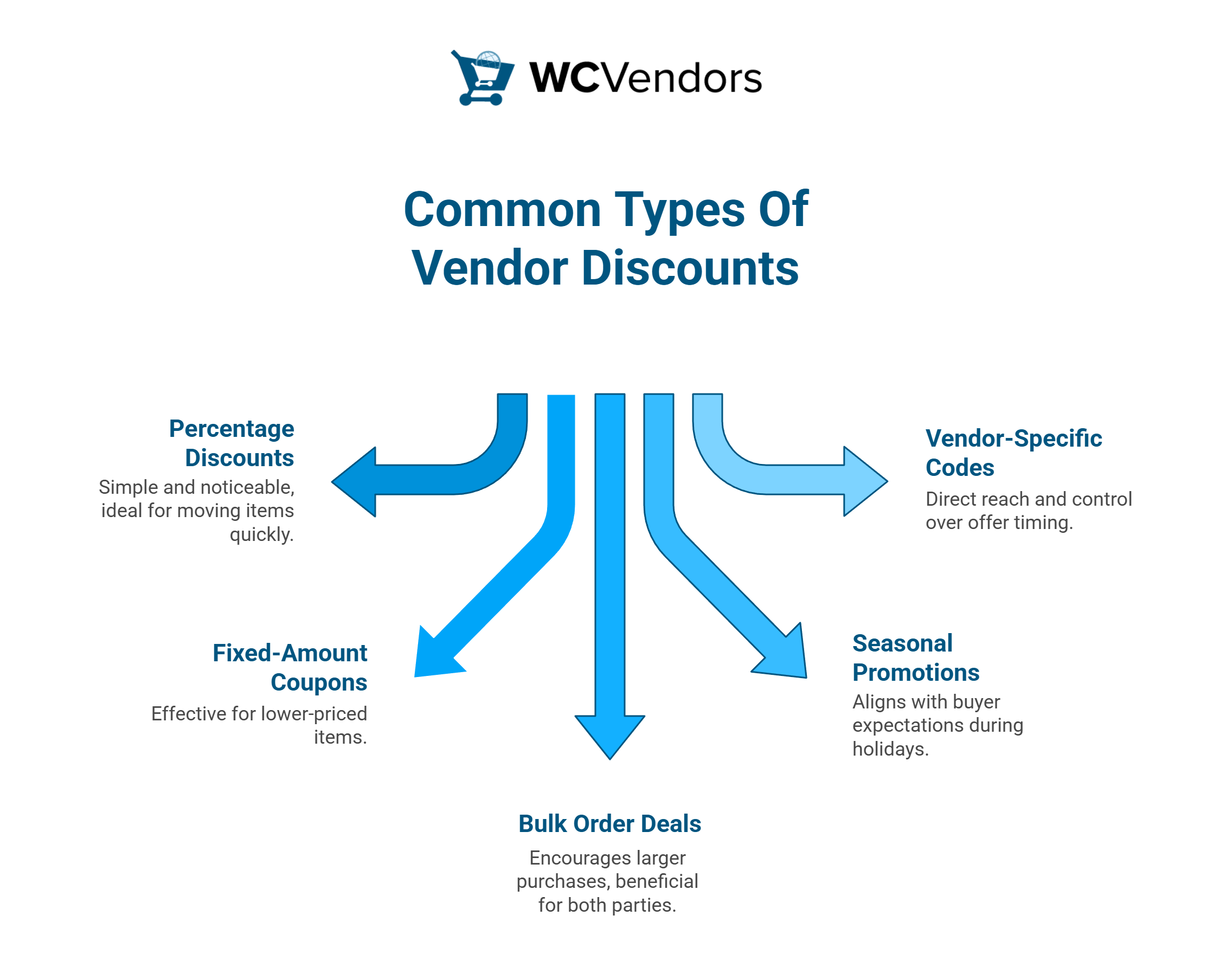
Vendors use different kinds of price changes depending on what they want to achieve. The good thing is that each type of vendor discount can fit a different goal. When vendors know their options, they can make better choices for their listings.
Percentage discounts
A percentage discount reduces the price by a set percentage. It is simple to understand and easy for buyers to notice. A larger percentage works well when the vendor wants to move items faster. This type helps vendors highlight the value of their products in a very direct way.
Fixed-amount coupons
A fixed-amount coupon takes off a specific amount from the price. They also work well for items that already have a lower price.
Bulk order or quantity-based deals
Some buyers want to buy more than one item. When vendors offer a better price for larger orders, they create a mutually beneficial deal for both parties. Buyers save money when they buy more. Vendors move more stock without waiting too long. This type of discount is often used for items that people purchase in sets or for items that don’t sell as quickly when bought one at a time.
Seasonal or event-based promotions
There are times during the year when buyers expect lower prices. These moments include holidays or other large events. Vendors use seasonal discounts to match the buyer’s mood. It makes the marketplace feel more active because more people are searching for good offers. This type of vendor discount also helps vendors keep up with the season’s flow so they do not fall behind other sellers.
You may also read “Your Holiday Marketplace Guide: Maximizing Sales During The Festive Season“

Vendor-specific coupon codes
Some vendors like giving out coupon codes that only apply to their own products. They might share the code on social media or in their shop messages. This gives them a direct way to reach their buyers. These codes also allow vendors to control when the offer starts and ends.
How Vendor Discounts Affect Sales And Revenue
A vendor discount does more than change a price on the screen. It also shapes how buyers think, how vendors plan their next steps, and how the marketplace owner views overall performance. When you understand how these discounts influence each layer, it becomes easier to guide vendors and keep the marketplace cash flow steady.
Impact on buyer behavior and conversion rates
Buyers make many small choices before they decide to purchase a product. They compare prices, look at reviews, and check the photos. A vendor discount creates a moment where the buyer stops and pays closer attention.
A survey of online apparel shoppers reported that sale promotions (discounts and coupons) strongly influenced customers’ decision to buy. It was noted that discounted prices made products more attractive and encouraged purchase behavior.
A simple price drop helps the buyer feel more comfortable with the idea of adding the item to the cart. When buyers feel that the value matches the price, they are more likely to complete the order.
How discounts interact with commissions
Every marketplace has a commission setup. When a vendor discount is active, it affects the order total, which then impacts the amount the vendor receives. This is normal, and vendors must understand that the reduced price will lead to a smaller commission payout. Even so, many vendors still choose to use discounts because they want more orders and more product visibility.
Revenue split considerations for marketplace owners
Marketplace owners often worry that too many discounts will lower their total earnings. This concern makes sense, but the full picture shows something more balanced. When a discount attracts more buyers, it can drive more orders across the site. This kind of flow supports healthy revenue over time. Marketplace owners simply need clear rules so vendors use discounts with thought and not at random.
Avoiding margin loss and discount overuse
A discount should help, not harm. When vendors use discounts too often, buyers may start waiting for lower prices instead of paying the regular price. This leads to weaker margins. To prevent this, vendors need guidance. They must understand that a discount must be strategic. A vendor discount works best when used during slow periods, product launches, or seasonal events. When used with a clear purpose, it supports both the vendor and the marketplace.
Best Practices For Using Vendor Discounts
1. Setting clear discount rules and limits
Vendors need rules that guide how they use discounts. These rules can include how long a discount should last, how often it can be used, and what products it should cover. Clear limits help vendors protect their margins. They also help buyers trust that the discounts they see have a purpose. When vendors understand the rationale behind each discount, they make choices that support their own goals and the flow of the marketplace.
2. Tracking performance and adjusting promos
A discount should not run without a reason. Vendors need to check how each offer performs. When they see what works, they can repeat the best practices in the future. If a discount does not create interest, they may try a different style next time. Tracking gives vendors a simple way to improve the way they use discounts without guessing.
3. Preventing discount abuse or misuse
Some vendors may use discounts too often to achieve fast results. This can harm their long-term sales. It can also confuse buyers who expect the same low price all the time. Marketplace owners can step in by setting rules about how often discounts can appear. These rules protect the marketplace from sudden price drops that undermine product value.
4. Teaching vendors when to use discounts strategically
Many vendors know how to turn a discount on, but not all of them understand the best moment to use it. You can guide them by helping them see when a discount can support a real goal. When used with a clear purpose, it becomes a helpful tool instead of a random price drop. It can support long-term growth rather than short-term results that fade quickly.
How WC Vendors Supports Vendor Discounts
WC Vendors gives sellers a simple way to manage their own price changes. The platform’s tools guide vendors through each step, enabling them to manage their offers accordingly.
Creating coupons inside the vendor dashboard
Vendors can set up their own coupons directly through the dashboard. Here’s how vendors can create a discount using WC Vendors:
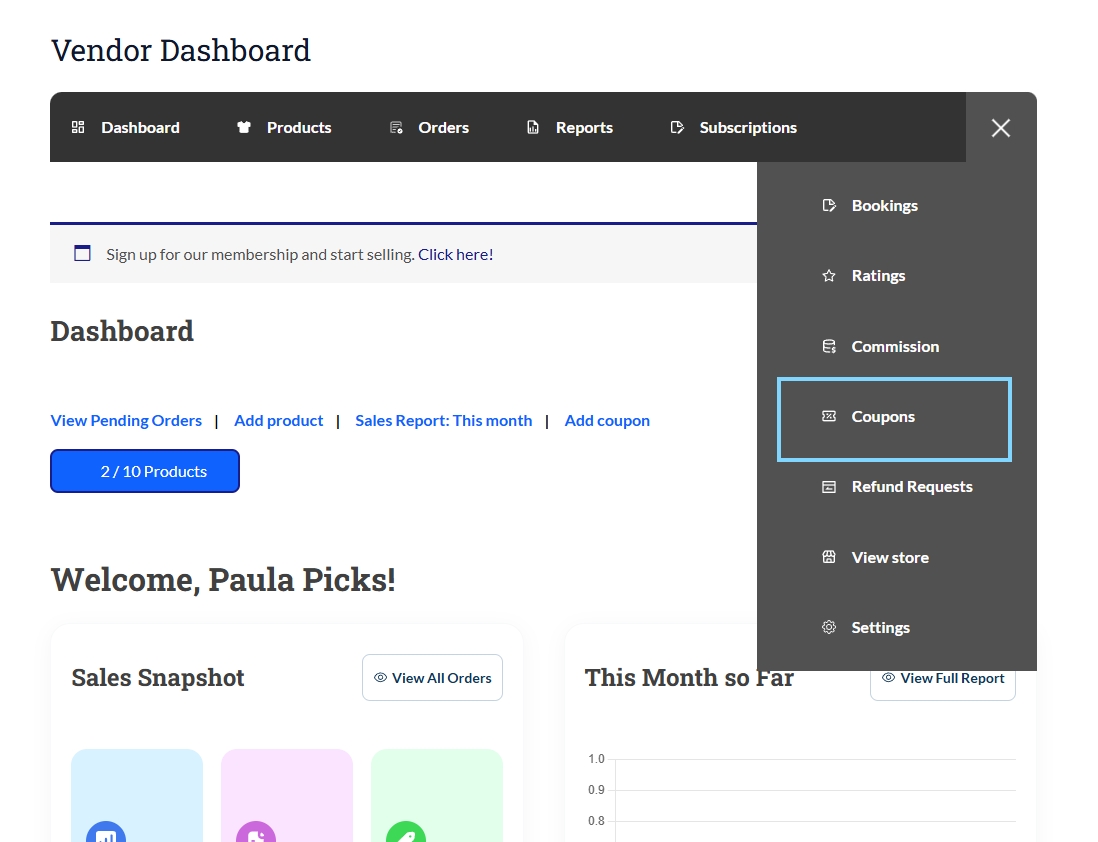
Step 1: Go to the vendor dashboard, click Coupons
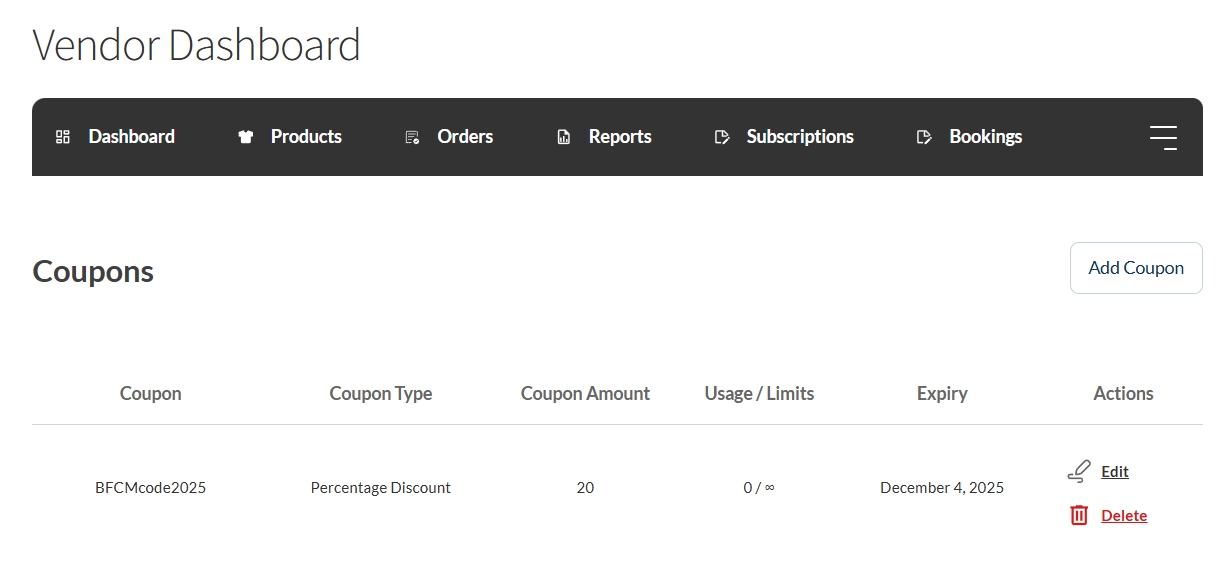
Start by logging in to your account. Open your vendor dashboard. This is your main workspace, where you handle your products, orders, and shop tools. On your dashboard menu, click the Coupons tab. This page shows all the coupon codes you have created. If this is your first time, the page will be empty, and that is normal.
Step 2: Click Add Coupon
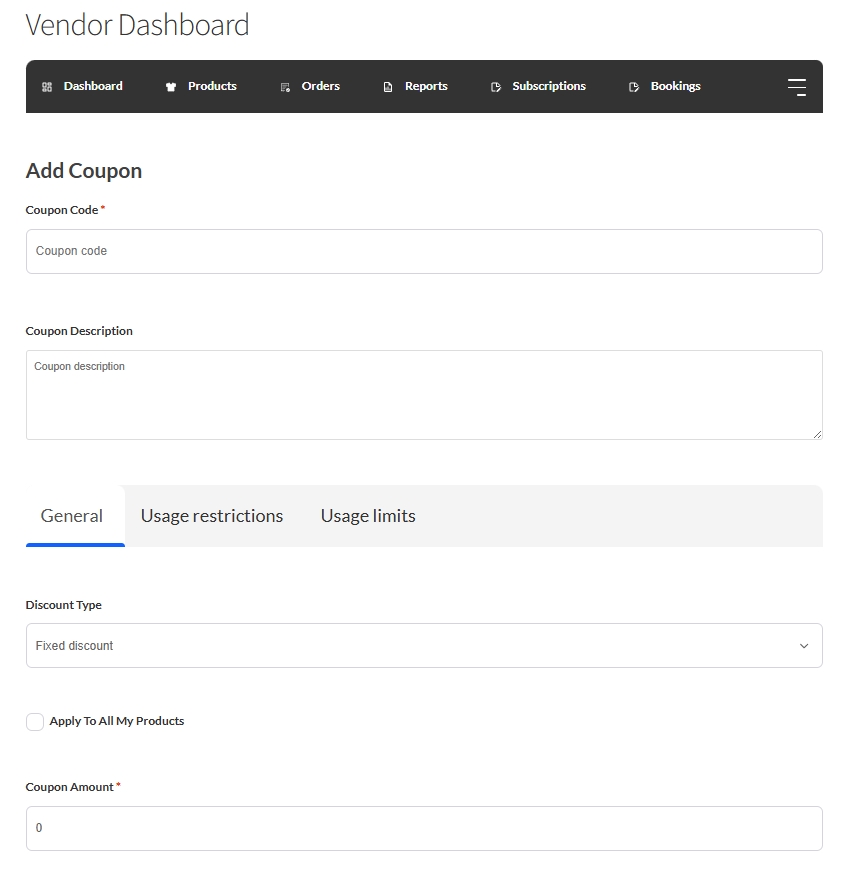
Click Add Coupon to create a new offer. A form will appear. This is where you will enter all the details for your vendor discount.
Step 3: Choose the discount type
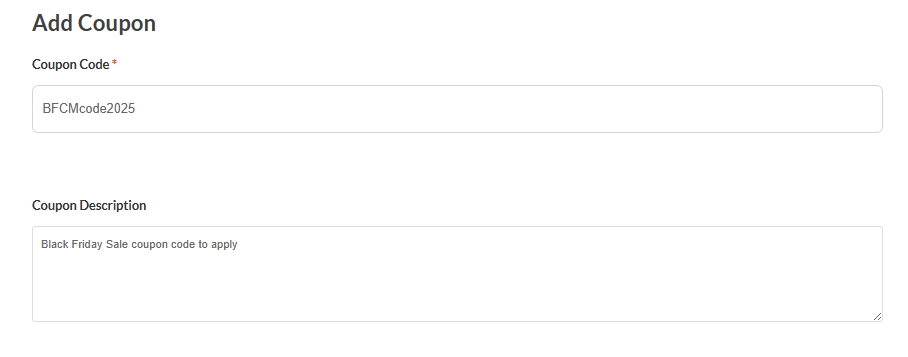
First, indicate your coupon code and coupon description. Next, under the General tab, pick the kind of discount you want to offer. For example, you may choose a percentage change or a fixed amount. Pick the type that fits your product and your goal for the offer.
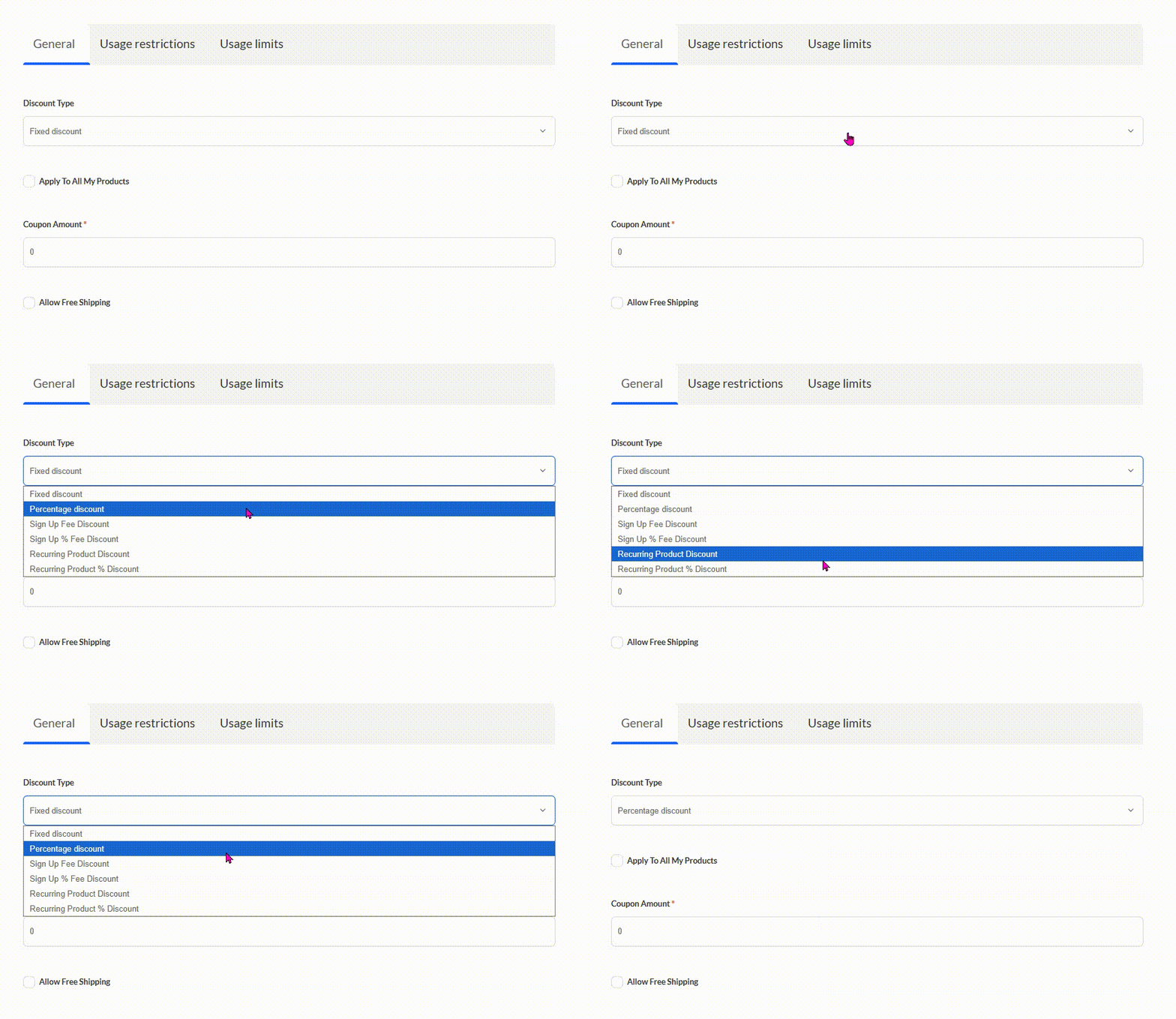
Step 4: Set the coupon amount
Enter the amount of the discount. This number tells the buyer how much they will save. Choose an amount that feels fair and still supports your earnings.
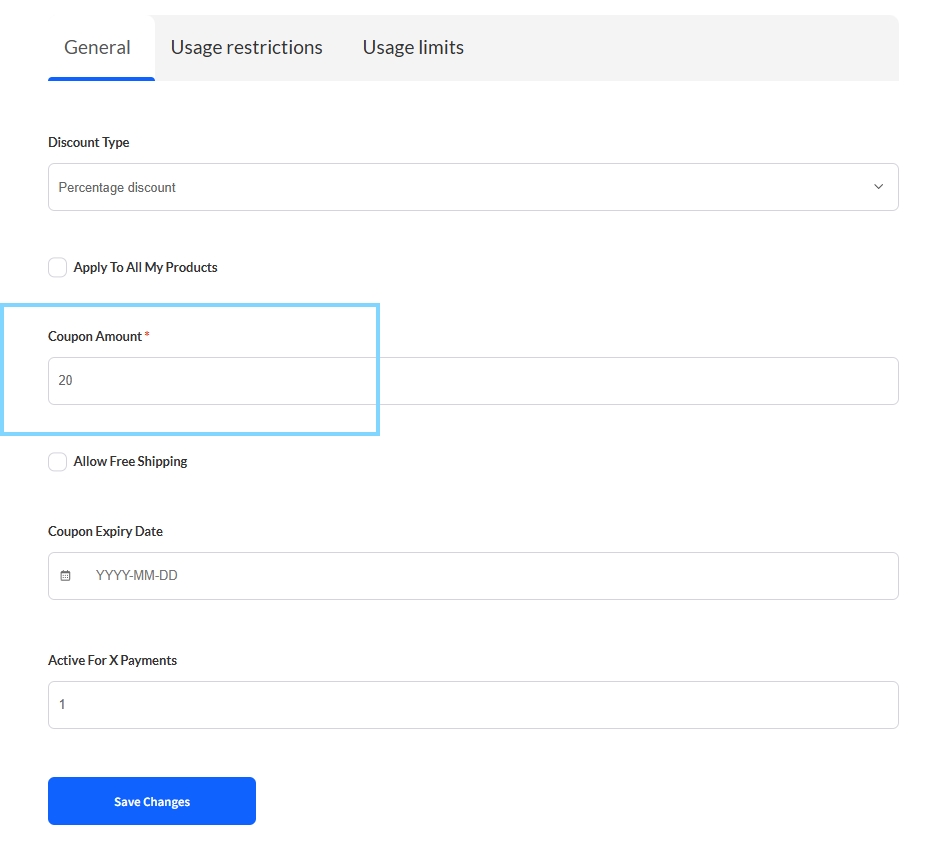
Step 5: Add usage limits and an expiry date
Set how long the coupon will last. A time limit and usage cap help you stay in control of your offer. It also keeps the discount from running longer than you planned.
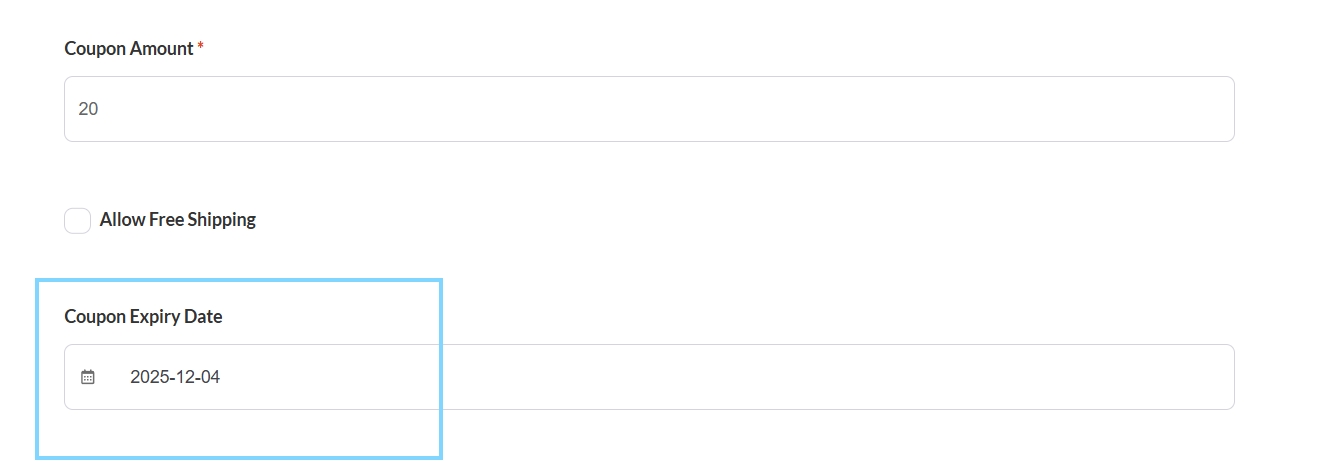
After finishing these steps, review the details and save your coupon. Your vendor discount is now ready to use and can help you draw more attention to your products.
You may also read: “How To Set Up Marketplace Coupons (Easy, Complete Guide)“

Final Tips For Marketplace Owners
A vendor discount can help your vendors bring more attention to their products, but it works best when used with care.
In this article, we discussed what you need to know about vendor discount:
- What is a vendor discount?
- Common types
- How they affect sales and revenue
- Best practices
- WC Vendors coupons
You can remind your vendors that discounts should not be used every single time sales slow down. Too many price changes can make buyers wait for the next offer rather than pay the regular price. Encourage your vendors to use discounts during key moments such as product launches, slow months, or seasonal events. This keeps the offer meaningful and helps protect long-term value.
Frequently Asked Questions
How is a vendor discount different from a store-wide coupon?
A store-wide coupon affects every product in the marketplace. A vendor discount applies only to the items sold by one vendor. This gives each vendor more control over how they run their shop.
Can vendor discounts affect commissions?
Yes. When the price goes down, the commission amount also goes down because it is based on the final order total. Many vendors still use discounts because the extra attention can bring long-term buyers.
What products are best for vendor discounts?
Discounts work well for slow-moving items, overstocked products, new launches, and products tied to seasonal trends. It depends on your goal and timing.
How long should a vendor discount last?
Short periods work better. A few days or a week keeps the offer clear and focused. Longer discounts may lose their impact and may affect your margins more than you expect.