Managing several vendors at once can feel like juggling too many things at once. The lack of clear systems often leads to confusion, stress, and unhappy sellers. A proper vendor management process gives every vendor a fair and organized way to work. It builds trust between marketplace owners and sellers because everyone knows their roles. This makes the marketplace fair and easy to manage.
In this guide, we will show you simple ways to strengthen and organize your vendor management process. Each section explains practical steps that work for both small and large marketplaces. You will see how to assess what you have, spot what needs fixing, and apply vendor management best practices to improve your daily operations.
Ready? Let’s get to it!
What Is A Vendor Management Process?
A vendor management process is the system a business uses to handle vendors from start to finish. It covers every part of the relationship, from vendor onboarding to product uploads and payments. Think of it as a map that keeps everyone on the same path. When this process is clear, both the marketplace owner and the vendors know what to do and when to do it.

In a marketplace, vendors act like your partners. They supply products, handle orders, and talk to customers. Without a proper system, things can get messy. That’s why having a structured vendor management process keeps everything fair and easy to track.
Why it matters for marketplaces
When you manage many vendors, small problems can grow fast. A missing order, a late update, or an unclear payout can hurt the marketplace. But when you have a clear process, each step happens in the right order. Vendors know what’s expected, and you know what’s happening behind the scenes.
This setup also helps with risk management. Every decision and action gets recorded, so if something goes wrong, it’s easy to check where it started. Using vendor management software makes this even easier, since everything is in a single dashboard rather than multiple spreadsheets.
An effective vendor management system saves time and builds trust. With clear steps, open communication, and consistent rules, the marketplace runs smoothly for everyone.
How To Improve Your Vendor Management Process
If you’ve ever felt like managing vendors takes too much time or gets too confusing, don’t worry, you’re not alone. Every marketplace owner goes through that stage. The good thing is, once you start improving your vendor management process, things get a lot easier. It just takes a few smart steps and a bit of consistency. Here are a few easy ways to make your system better:
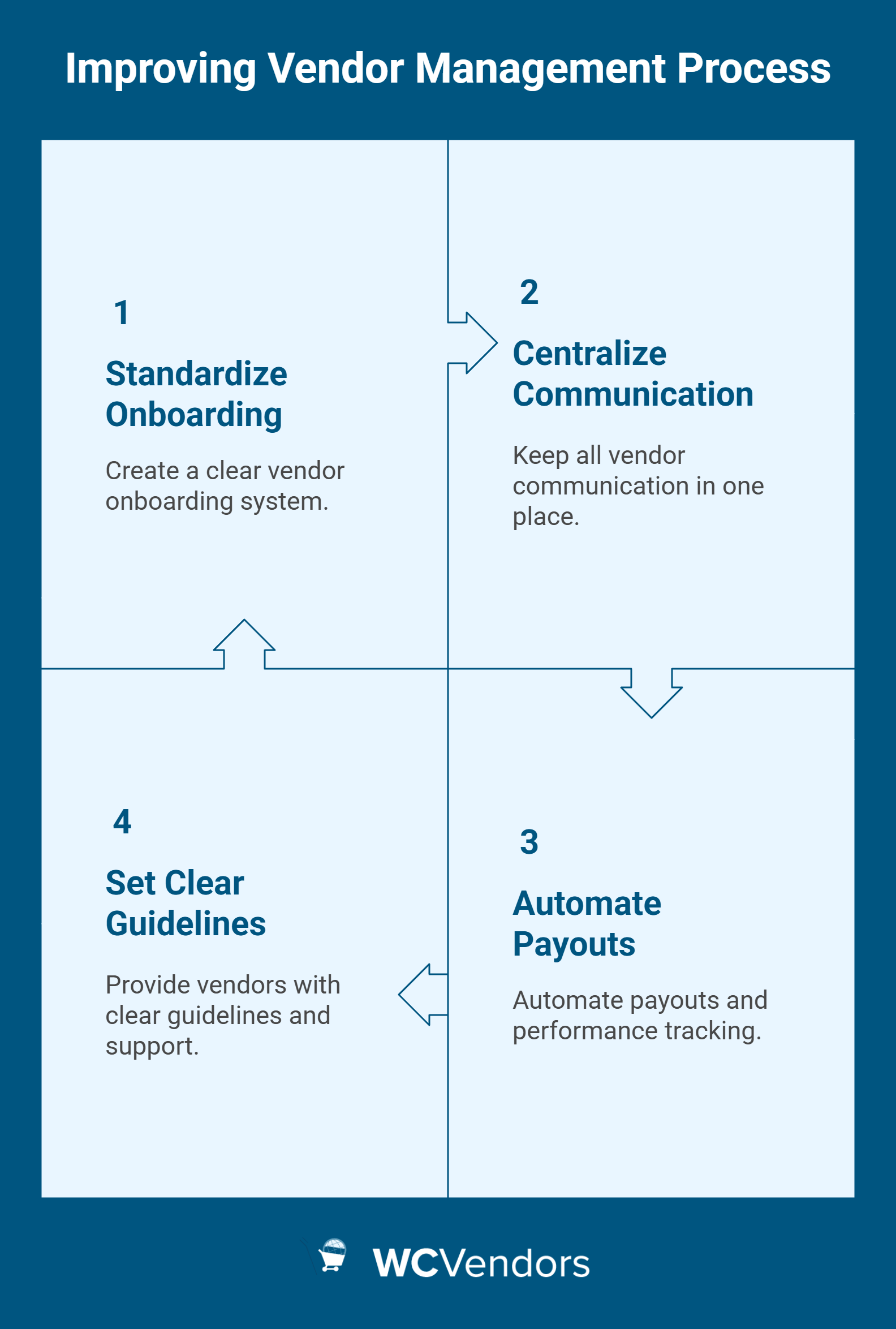
1. Standardize vendor onboarding
Start by creating a clear vendor onboarding system. Think of it like giving every new vendor a quick and easy roadmap. They should know what details to share, how to upload their products, and what rules to follow from day one. This includes registration, product submission, and approval.
💡If you use WC Vendors, you can take advantage of custom registration forms. This helps vendors provide complete information right away, reducing back-and-forth messages. Standard onboarding also supports risk management by verifying details before vendors begin selling.
2. Centralize vendor communication
Next, keep all your vendor communication in one place. Jumping between emails, chats, and random notes can get really stressful. It’s better to use your dashboard or vendor management software for updates and questions.
This keeps the conversation clean and easy to track. Vendors can reply faster, and you can check back anytime without having to dig through old messages. When communication is clear, it builds trust, and vendors appreciate that more than you think.
3. Automate payouts and performance tracking
Now let’s talk about payments and tracking. If you’re still sending payouts manually, that can eat up hours every week. Tools like Stripe Connect can handle that for you, so vendors get paid on time, every time.
You can also use dashboards that automatically show vendor performance. That way, you see who’s doing well and who needs help. It’s an easy way to keep your vendor management process fair and transparent for everyone.
Also, tracking finances in QuickBooks helps you stay on top of all transactions. You can then use tools with QuickBooks project management integration to align your accounting and vendor payouts seamlessly.
4. Set clear guidelines and support resources
Finally, don’t forget to give your vendors something to rely on. A simple rulebook or guide can save you both a lot of headaches. Write down what’s allowed, what’s not, and how things like refunds and payouts work.
You can even make a small help page or FAQ that vendors can check anytime. It’s one of the most effective vendor management practices you can follow because it builds independence. When vendors can answer their own questions, you’ll spend less time fixing small issues and more time growing your business.
📝 From how we handled common marketplace questions, we’ve seen how having a chat assistant, like StoreAgent Chat, can make a huge difference. How? StoreAgent helps answer questions in real time, which means you don’t have to stop what you’re doing to reply to simple messages. It also reduces delays by answering all sorts of questions instantly, even in different languages! That kind of support improves both efficient communication and trust.
Best Practices For Ongoing Vendor Management
Improving your vendor management process is not just about setting it up once and forgetting about it. It’s about staying consistent and keeping things up to date as your marketplace grows. Once your vendors are onboarded and running, the next step is to ensure they remain supported and motivated. Here are a few simple habits that can make your daily management smoother and more effective:
Review vendor performance regularly
Checking how your vendors perform helps you see what’s working and what’s not. You can look at factors like sales volume, customer ratings, and how quickly they respond to orders. This shows which vendors need more support and which can serve as role models for others.
Do not wait until something goes wrong to check vendor data. By then, it’s often too late to fix small issues. Instead, set a regular schedule to review performance. You don’t need fancy tools to do this. Just consistent habits. Over time, this kind of routine creates effective vendor management that leads to better teamwork and results.
You may also read: How To Use The Vendor Rating System To Boost Customer Trust.

Keep documentation updated
Rules and processes can change as your marketplace expands. Make it a habit to review your guides, FAQs, and checklists every few months. Outdated rules can confuse, especially new vendors.
Keeping your documents up to date also supports risk management. When policies are clear, you reduce mistakes that could lead to disputes or payment delays. Simple updates make a big difference in keeping everyone on the same page.
Encourage feedback and community growth
Good communication doesn’t stop after vendor onboarding. In fact, the best marketplaces grow when vendors feel heard. Try asking your vendors for feedback after each major update or event. Ask what worked well and what they think can be improved.
You can even set up a small community chat or group where vendors can share tips and help each other. This creates a friendly space where everyone learns together. Over time, you’ll notice that vendors become more confident and take more initiative. That’s the heart of vendor management best practices by building trust and cooperation that lasts.
Other Related Articles



Final Thoughts
Over time, you will learn that success doesn’t come from handling everything at once; it comes from having a clear system. When you build an organized vendor management process, you make your day lighter, your vendors happier, and your marketplace more reliable.
In this article, we discussed simple ways to improve your vendor onboarding process:
- Standardize vendor onboarding
- Centralize vendor communication
- Automate payouts and performance tracking
- Set clear guidelines and support resources
From experience and how we’ve been handling things, we’ve come to know that these simple habits turn into strong results: regular communication, fair payouts, and clear onboarding steps that help vendors feel supported. These are small actions, but they show care and professionalism. It also builds trust, which is at the heart of effective vendor management. That’s the kind of teamwork that keeps a marketplace growing.
Lastly, remember that systems can always improve. Keep checking your rules, update your resources, and try new tools that make work easier. Every adjustment you make, no matter how small, helps vendors succeed and keeps your business stable for the long run. Managing vendors doesn’t have to be stressful when you treat it as a partnership built on trust, clarity, and teamwork.
Frequently Asked Questions
What is the purpose of a vendor management process?
A vendor management process helps businesses handle all vendor activities in an organized way. It covers vendor onboarding, communication, payments, and performance checks. The main goal is to keep everything clear and fair so vendors know what to do, and owners can track results easily. When the process is followed, both sides save time and avoid confusion.
How can I make vendor onboarding easier?
Keep your vendor onboarding steps short and clear. Ask only for the details you truly need and explain what happens after approval. If you use a marketplace plugin like WC Vendors, you can add custom forms that help new vendors join faster. This makes the process smooth for everyone and supports better risk management from the start.
How often should I review vendor performance?
It’s good to review vendor performance at least once a month. Look at sales, customer reviews, and how fast they handle orders. This helps you spot issues early and support vendors who need help. Regular reviews keep your vendor management process healthy and balanced.
What happens if a vendor breaks marketplace rules?
If a vendor breaks the rules, handle it with fairness and consistency. Remind them of the guidelines, explain what needs fixing, and give them time to correct it. If problems continue, follow your written policy for warnings or suspensions. Keeping clear records protects your business and builds trust with other vendors.