Marketplace 1099 obligations are different from sales tax, and people often treat the two as one. Sales tax is about what the buyer pays on an order. Form 1099-K is an information return about what a vendor received. Different form, different rules, and often a different responsible party.
What catches operators out is that marketplace 1099 duties follow the money, not the branding. Whether you have to issue anything at all depends on whose instruction moves funds into the vendor’s account. This guide walks through that chain, the thresholds in force for 2026, the filing calendar, what to collect from vendors before you pay them, and which records to keep.
One caveat first: None of this is tax advice, and the rules vary by situation and change with legislation. Treat it as a map of the questions to take to your accountant.
Sales Tax Versus Vendor Income Reporting
Sales tax and vendor income reporting are two separate obligations. One decides what a buyer pays on an order and where that money gets remitted. The other reports to the IRS what a vendor was paid across the year.
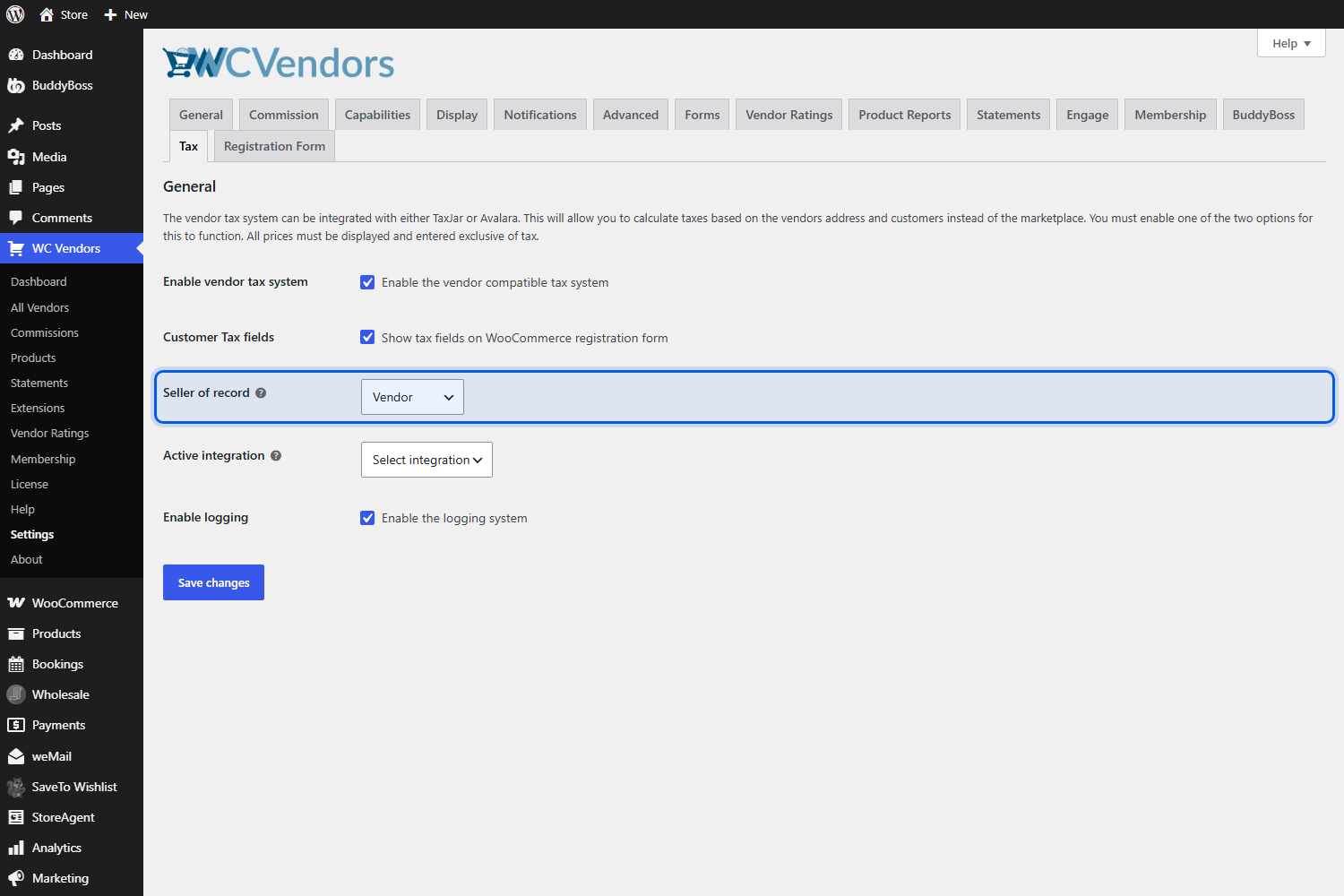
Sales tax on a marketplace order hinges on who the seller of record is. WC Vendors Tax handles that side, calculating sales tax automatically through TaxJar or Avalara, and it lets you set either the marketplace or the vendor as the seller of record. It can also upload orders and refunds to the tax service for reporting and filing. Our guide to marketplace tax automation covers that configuration in detail.
Here is where operators trip. The seller-of-record setting governs sales tax and says nothing about your marketplace 1099 position, because the Form 1099-K filer depends on who settles the payment. You can be the seller of record for sales tax without being the 1099-K filer, or vice versa.
Income reporting works on a different axis. It looks at payments: how much moved to each vendor, across how many transactions, and which entity pushed the funds.
What A 1099-K Is And Who Issues It
Form 1099-K, Payment Card and Third Party Network Transactions, reports the gross amount of payments a vendor received through card and third party network transactions. Whoever submits the instruction to move funds to that vendor must file it.
Most confusion about marketplace 1099 duties comes from missing that second point.
The reporting chain
Money moves from the buyer to a settlement entity, then to the vendor, and the IRS receives a report after year-end. The IRS calls the filer a payment settlement entity, or PSE. A PSE is either a merchant acquiring entity that settles payment card transactions or a third-party settlement organization, usually shortened to TPSO, that settles third-party network transactions.
According to the IRS Instructions for Form 1099-K, a PSE settles a reportable transaction when it submits the instruction to transfer funds to the payee’s account. Where two or more parties qualify as PSEs for the same transaction, the one that submits that instruction files the return and furnishes the payee statement. The IRS FAQs for third party filers apply the same test when a settlement entity and a processor both hold a contractual obligation to pay.
Gross means gross
Gross is the word to watch. The instructions define gross amount as the total dollar value of reportable transactions, with no adjustment for credits, cash equivalents, discounts, fees, refunded amounts, shipping, or any other amounts. Your commission never comes off it.
Two details on the form itself shape your record-keeping. Boxes 5a through 5l report the gross amount for each month of the year, so the filer needs monthly figures, not just an annual total. Box 3 reports the number of payment transactions, and it excludes refund transactions.
A vendor paid through both payment cards and a third-party network gets two separate forms, one for each transaction type. That split matters if your marketplace mixes payment methods.
How Your Payment Flow Sets Your Marketplace 1099 Role
Your payment architecture decides your marketplace 1099 role. The same storefront can make you a filer, a non-filer, or something in between, depending on where buyer funds land and who releases them to vendors.
When your marketplace is the settlement organization
Your marketplace is likely a TPSO when funds pass through an account you control, and you carry the contractual obligation to pay vendors. The IRS FAQs on whether your organization should be filing list four characteristics of a third-party payment network:
- A central organization: a substantial number of providers who are unrelated to it hold accounts with it.
- An agreement to settle: the organization and those providers agree to settle transactions between providers and purchasers.
- Agreed standards and mechanisms: the arrangement spells out how settlement happens.
- A guarantee of payment: providers are guaranteed settlement on their sales.
That same FAQ gives an online marketplace that sits between buyer and seller, transferring funds from one to the other, as an example of a TPSO. The IRS also rules out some arrangements. An in-house accounts payable department and an automated clearing house do not qualify as TPSOs.
If that describes your build, the obligation is yours, and outsourcing the paperwork does not move it. The third-party filer FAQs confirm you may contract someone else to prepare and file the returns, but the entity that submits the transfer instructions stays liable for the penalties when reporting is late, missing, or wrong.
When funds land in your account first
A middle case catches many operators. Some setups collect every buyer payment into the marketplace’s own processor account, then pay vendors their share from it by bank transfer, PayPal, or a scheduled payout tool.
The IRS calls the marketplace in that arrangement an aggregated payee. The Form 1099-K instructions say that if you receive payments from a PSE on behalf of payees and distribute them, you are the participating payee toward the PSE that paid you and the PSE toward the vendors you pay. In plain terms, your processor reports what it paid you, and the marketplace 1099 reporting duty toward each vendor can land on you.
When your processor settles the funds
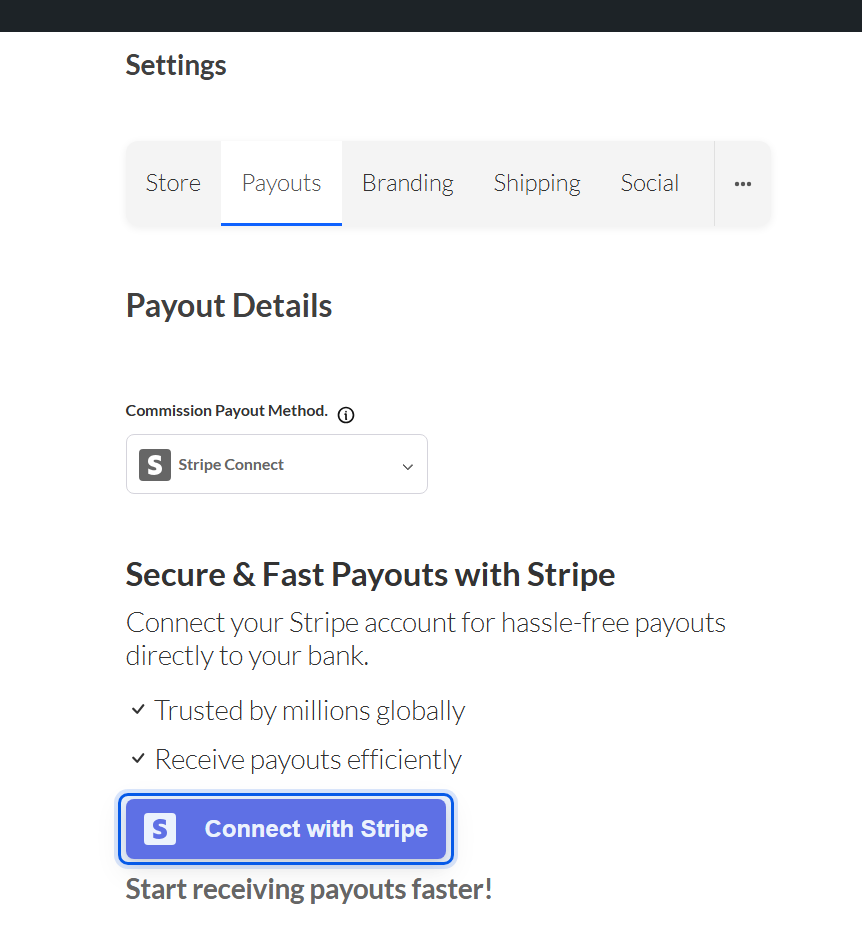
Where the vendor’s own processor account receives the money, the reporting duty generally sits with the processor rather than with you. WC Vendors Stripe Connect works this way. Vendors connect their own standard Stripe accounts and receive commissions into those accounts, using a one-click connection on the Shop Settings page of their vendor dashboard.
Stripe’s support article on 1099 forms for platforms and marketplaces says Stripe generates and files 1099-K forms for Standard connected accounts that meet the thresholds. For Express and Custom connected accounts, the platform files instead, so the account type matters as much as the processor’s name. Stripe’s tax reporting documentation for Connect platforms frames the rule around pricing control, with Stripe issuing forms where it controls pricing or where the connected account pays fees directly to Stripe.
Resist the urge to assume the rest. Processor reporting behavior varies by account type and country, and it changes over time. Read your processor’s current documentation and get written confirmation of who files before you rely on it. Our walkthrough of Stripe Connect vendor payouts covers the payment flow itself.
Watch the vendors who never connect
Vendors who skip the Stripe connection still need to be paid. WC Vendors lets you set a fallback payout method, typically a manual bank transfer or PayPal, for vendors who have not connected yet. For those vendors, your marketplace is moving the money, not Stripe, so their marketplace 1099 picture may look very different from everyone else’s.
The Stripe Connect settings include a Require Connected Account option. With it enabled, vendors must connect a Stripe account before they can add new products, which keeps every selling vendor on the same documented payment path.
Here is how responsibility usually maps:
| Situation | Who generally files the 1099-K | Your job as operator |
|---|---|---|
| Funds settle into the vendor’s own processor account, such as a Stripe Standard connected account | The processor | Confirm in writing, keep records, brief vendors |
| Your marketplace settles payments itself as a TPSO | Your marketplace | Collect TINs, file with the IRS, furnish payee statements, keep records |
| Funds land in your account and you distribute vendor shares | Likely your marketplace, as an aggregated payee | Plan as the filer until your accountant confirms otherwise |
| Third party network payments stay under the threshold | Possibly nobody | Keep records anyway, because the vendor still reports the income |
One more rule saves double work. A payment reportable under both the 1099-K rules and the 1099-NEC or 1099-MISC rules gets reported once, on the 1099-K.
Current 1099-K Thresholds And Why You Must Check Them
For the 2026 tax year, a TPSO is not required to file a Form 1099-K for a vendor unless gross payments exceed $20,000 and the number of transactions exceeds 200. Both tests have to be met.
How the threshold got here
That figure is not the one many pages still quote. Section 9674 of the American Rescue Plan Act set a $600 threshold with no transaction count, and its rollout was delayed repeatedly. According to IRS news release IR-2025-107, issued in October 2025, the One, Big, Beautiful Bill retroactively reinstated the threshold that applied before ARPA.
The IRS page Understanding your Form 1099-K states the same $20,000 and 200-transaction test. The current Instructions for Form 1099-K, labeled Revised 12/2026, carry it as the de minimis exception.
Check it again for the year you are actually filing. Marketplace 1099 thresholds have moved, been delayed, and been reversed within a five-year span. Any article on the subject, including this one, can go stale between when you read it and when you file.
The exception with no exception
Payment card transactions have no de minimis threshold. The IRS third-party filer FAQs state plainly that all payment card transactions must be reported on Form 1099-K. So where part of your marketplace runs on direct card settlement rather than a third-party network, a small vendor can be reportable at any amount.
A worked example
Some illustrative figures make the mid-year problem concrete. A vendor that reaches 260 sales totaling $24,000 through a third-party network by October has passed both tests, and a form is due even though nothing looked reportable in June. Drop that to $18,000 across the same 260 sales and the dollar test fails, so no filing is required.
Filers may still send a form below the threshold. The IRS tells sellers they may receive a Form 1099-K for lower amounts, and its third-party filer FAQs confirm a payor may issue one when payments have not met the threshold.
Other forms and state thresholds
Forms 1099-NEC and 1099-MISC have their own thresholds. For payments made after December 31, 2025, the IRS sets that threshold at $2,000 or more to a recipient. It matters if your marketplace also pays vendors directly for services outside the card and network flow.
State rules sit on top as a separate layer. Some states set their own 1099-K thresholds and filing requirements. Stripe’s 1099-K state requirements table, for example, lists a $600 threshold for Massachusetts and Virginia and a $1,000 threshold for New Jersey. Check each state’s revenue department, since these figures change too.
Marketplace 1099 Deadlines And Filing Mechanics
If your marketplace is the filer, the calendar is fixed. Payee statements are due to the vendor by January 31 of the year after the transactions. Filing with the IRS is due February 28 on paper, or March 31 electronically, per the IRS third-party filer FAQs.
Anyone filing 10 or more information returns in a calendar year must file them electronically, and that count includes Forms 1099-K alongside other information return types. The IRS accepts electronic filing through its Information Returns Intake System (IRIS) or the older FIRE system.
Payee statements can go out on paper as Copy B, or electronically when the vendor consents under the Treasury regulations. Build that consent into onboarding rather than chasing it in January.
Two smaller rules round this out. A filer cannot charge vendors a fee for furnishing their Form 1099-K, because the IRS treats issuing it as a statutory duty. The responsible filer’s name, address, and TIN also appear on the form, even when a contractor prepares it.
Collecting Form W-9 And Keeping Records
Collect a Form W-9 from every vendor you might have to report on, and collect it before the first payout rather than in January. The W-9 is how a U.S. vendor gives you the correct name and taxpayer identification number that an information return needs, certified under penalties of perjury.
Backup withholding is what makes this urgent rather than merely tidy. The Instructions for Form 1099-K state that payees who have not furnished a TIN in the required manner are subject to it. The IRS puts the current backup withholding rate at 24 percent. Chasing a TIN after eleven months of payouts is a very different conversation from asking at signup.
Verify TINs and handle foreign vendors
Collecting a TIN is half the job. The IRS runs a TIN Matching Program that filers can use to verify payee TINs before forms go out, which catches typos while the vendor is still easy to reach.
Vendors outside the United States are a separate track. A foreign vendor generally documents non-U.S. status on a Form W-8 rather than a W-9, and the Form 1099-K instructions set out when a PSE may skip reporting for payees with foreign addresses. Ask your accountant how those rules apply to your vendor base.
A form field is not a W-9
Be careful here, because this is where marketplace software gets oversold. A W-9 is a specific IRS form the vendor completes and certifies. Collecting the same data in a custom field on a registration form is not the same thing, and no field labeled tax ID substitutes for the signed form.
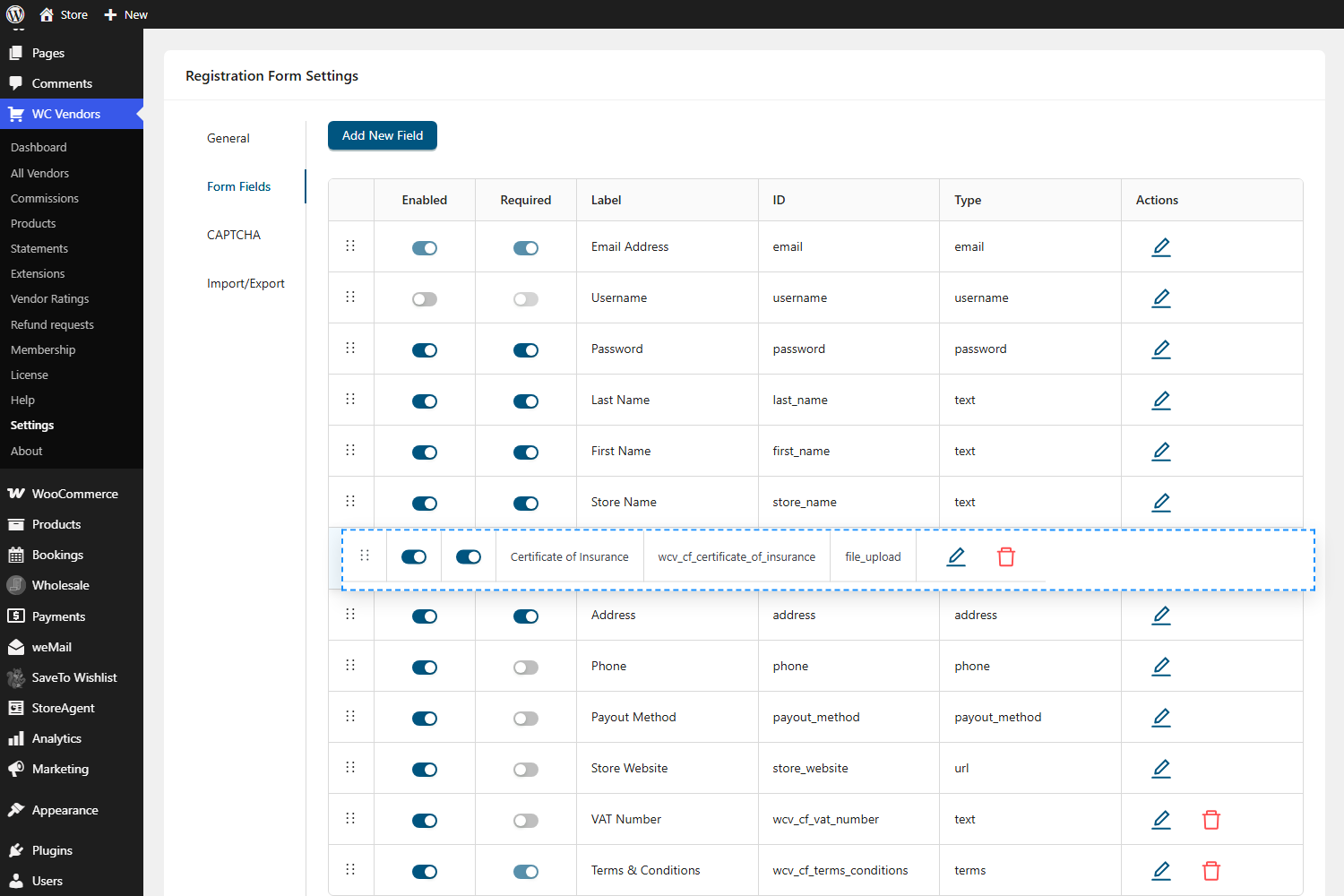
WC Vendors does not collect W-9s and does not file 1099-K forms. We would rather say that plainly than have you discover it in January. What WC Vendors Signup gives you is a drag-and-drop builder for the vendor registration form, with field types that include file uploads, so onboarding can ask for what your marketplace needs at the point of application. Signup is included in the Growth and Business plans.
For the W-9 itself, use your processor’s onboarding flow where it collects one, or a signed document you store yourself. Stripe’s account onboarding, for example, asks U.S. vendors for a tax identification number when they create their account.
WC Vendors Tax also has a vendor tax ID setting, which its documentation describes as the business tax ID to show on invoices. That field exists for sales tax and invoicing, so do not read it as a certified TIN on file.
Records that survive a query
Keep enough to rebuild, per vendor and per month: gross order value, your commission, refunds, shipping, tax collected, payout dates, and payout amounts. The gap between gross and payout is exactly what vendors query, and the form reports a month-by-month gross figure.
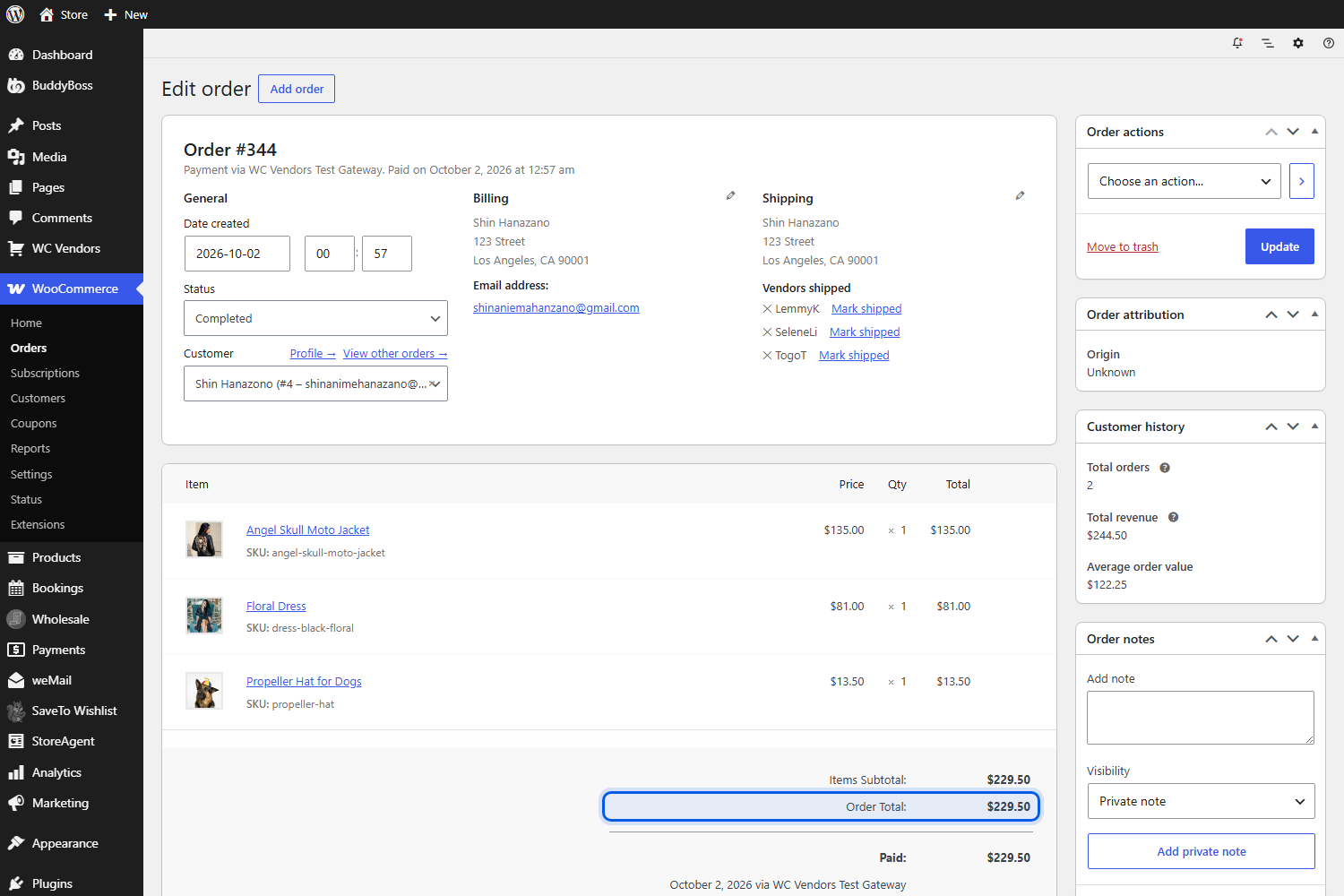
WC Vendors gives you a commissions list under WC Vendors > Commissions in the WordPress admin. Each row covers an order line and carries the vendor, product, quantity, commission, shipping, tax, totals, status and time. On the vendor side, WC Vendors Pro adds a Commissions tab to the vendor dashboard and lets vendors export their orders to CSV for a chosen date range, so they can pull their own figures instead of emailing you.
WC Vendors Pro also generates a vendor monthly statement for each vendor. Each statement breaks down gross revenue, commissions, tax, shipping, refunds, fees, and net payable, and both admins and vendors can download it as a PDF. Twelve of those statements give you a per-vendor annual view without rebuilding it from raw order data. For payout schedules and methods, our guide to managing vendor payouts covers the options.
Running test orders through a WC Vendors marketplace and opening that commissions list made one thing obvious about what it is built for. Every row answers “what do I owe this vendor?” None of them answers “what gross amount passed through to this vendor.” That is the monthly statement’s job, and even then you should reconcile its gross revenue against your processor’s reports, because the processor’s 1099-K figure follows the IRS definition of gross rather than your marketplace settings.
A habit worth building: Download each vendor’s monthly statement as it generates, and reconcile the set against your processor’s dashboard every quarter. Catching a mismatch in April is far easier than reconstructing twelve months under a January deadline.
What To Tell Your Vendors
Tell vendors three things in writing: who will issue their tax forms, what figure will appear on them, and that they must report their income whether or not a form arrives.
That last point prevents the most arguments. The IRS is explicit about it. Whether or not a seller receives a Form 1099-K, they must report income from selling goods or providing services, and a form may arrive even when payments fall under the threshold. A vendor who reads “no form” as “no income to declare” is heading for a problem you will get blamed for.
Set expectations about the number too. Any vendor seeing a gross figure noticeably larger than the payouts that reached their bank will assume an error, when the difference is commission, processing fees, and refunds that gross ignores. Say it once, in advance, in plain language.
If vendors will get their forms from your processor rather than from you, say so and name the processor. Vendors who sell on several platforms can also receive more than one Form 1099-K, a point the IRS makes directly to sellers.
Your vendor agreement is the natural place for all of it. Our guide to what a vendor contract covers sets out the wider structure, and the tax paragraph belongs right beside the payout terms so vendors read both together. If you will deliver forms electronically, ask for that consent in the same place.
Getting Your Marketplace 1099 Obligations Right
One reframe is worth carrying away. Your marketplace 1099 position is set by your payment architecture, not by your branding. A buyer who thinks they bought from you, an order confirmation with your logo on it, vendors who call you the platform: none of it counts here. Whoever pushes funds into a vendor’s account owns the reporting, and a marketplace that collects first and distributes later can end up owning it without meaning to.
So the practical first step is not tax research. Draw your money flow on paper, confirm each hop with your processor in writing, and take that diagram to an accountant along with the current IRS thresholds for your filing year. If the answer is that you file, the work is mostly calendar and collection: W-9s at signup, TIN checks before January, e-delivery consent in your vendor agreement, and monthly gross figures you can defend.
Record keeping is what the software genuinely fixes. WC Vendors Pro gives every vendor a dashboard with their own commission records, date-range order exports, and monthly statements that run from gross revenue to net payable, which is the gap vendors ask about every January. Pro is $99.50 with Stripe Connect and WC Vendors Tax included. None of this is tax advice, so keep your accountant in the loop as the rules move.
Here’s what we covered in this article:
- Sales tax versus vendor income reporting
- What a 1099-K is and who issues it
- How your payment flow sets your marketplace 1099 role
- Current 1099-K thresholds and why you must check them
- Marketplace 1099 deadlines and filing mechanics
- Collecting Form W-9 and keeping records
- What to tell your vendors
Frequently Asked Questions
Does my WooCommerce marketplace have to issue 1099-Ks?
Only where your marketplace is the entity submitting the instruction to transfer funds to vendors. The IRS puts the filing duty on the payment settlement entity that pushes the money. A marketplace holding funds and paying vendors from an account it controls generally carries the obligation, including when it collects through a processor and then distributes vendor shares itself. A marketplace whose vendors are paid into their own connected processor accounts generally does not. Map your money flow, then confirm it in writing with your processor and your accountant.
What is the marketplace 1099 threshold right now?
For the 2026 tax year, a third-party settlement organization must file when gross payments to a vendor exceed $20,000, and transactions exceed 200. Both conditions have to be met. The One, Big, Beautiful Bill restored that threshold retroactively, replacing the $600 figure many pages still quote. Payment card transactions have no threshold at all, and some states set lower thresholds of their own. Verify the numbers on IRS.gov for the year you are filing.
Do I need a W-9 from every vendor?
Collect one from any U.S. vendor who could plausibly become reportable, because you cannot predict in January who crosses a threshold in October. Vendors who have not furnished a TIN in the required manner are subject to backup withholding, currently 24 percent. That is a painful conversation to have retrospectively, and collecting at signup costs you one step in the onboarding flow. Foreign vendors generally provide a Form W-8 instead. Your accountant can tell you where your own cutoff sits.
Why is the 1099-K figure higher than what the vendor was paid?
Because the form reports gross, not net. The IRS defines gross amount as the total value of reportable transactions, with no adjustment for credits, discounts, fees, refunded amounts, shipping or other amounts. Your commission and the processor’s fees are still inside the number. Any vendor comparing that figure to their bank deposits will see a gap, so explain it before the forms arrive.
Who files 1099-Ks for vendors paid through WC Vendors Stripe Connect?
WC Vendors Stripe Connect uses Standard Stripe accounts that vendors connect themselves. Stripe’s support documentation says Stripe generates and files 1099-K forms for Standard connected accounts that meet the thresholds. Vendors you pay through a fallback method, such as a manual bank transfer or PayPal, sit outside that arrangement, so check their treatment separately. Confirm the current position with Stripe before you rely on it.
When are marketplace 1099 forms due?
Payee statements are due to vendors by January 31 of the year after the transactions. Forms 1099-K are due to the IRS by February 28 on paper or March 31 when filed electronically. Anyone filing 10 or more information returns in a year must file electronically. States may set their own deadlines on top.
Does WC Vendors collect W-9s or file 1099-K forms?
No. WC Vendors does not collect W-9s or file information returns, and any plugin claiming otherwise deserves a close look. What the platform gives you is the underlying record: per-order commission rows in the admin, a Commissions tab and date-range order exports in the WC Vendors Pro vendor dashboard, and monthly vendor statements that show gross revenue through to net payable. Filing belongs to whichever entity settles the payments.