
Moving a silent auction online immediately fixes the handwriting problem. It also introduces a set of decisions nobody warns you about: when bids should be visible, what happens if someone bids in the final ten seconds, and who chases the winner who never paid. Get those wrong, and you have swapped one kind of mess for another.
This guide walks through how a silent auction online actually works from lot to payment, how the multi-donor case changes things, and how to decide honestly between a hosted fundraising platform and running the event on a site you own.
What A Silent Auction Is
A silent auction is one where bids are hidden from other bidders until the auction closes. Nobody calls out numbers, and nobody reacts to the room. Each person decides what an item is worth to them and commits to that figure without knowing what anyone else has offered.
That single difference changes bidder behavior. In a live auction, people bid competitively against a rising number and often go past what they planned to spend. In a sealed format, most people bid close to the figure they arrived with, because there is no auctioneer building momentum and no rival to beat by a single increment.
For fundraising, the sealed format has a practical advantage that matters more than the psychology: it scales to many items at once. An online silent auction can run 50 lots simultaneously over a week, whereas a live auction has to work through them one at a time in a room full of people who all need to be present.
The mechanics of hidden bidding are worth understanding properly before you choose a format, and we have covered the specifics of how sealed bid auctions work elsewhere.
How An Online Silent Auction Works End-to-End
A silent auction online runs in five stages: listing, bidding, closing, payment, and fulfillment. Each stage has a decision attached to it, and the decisions compound.
Listing the lots
Every item becomes its own lot with a description, a photo, a starting bid, and a closing time. The description does more work online than it does in a room because nobody can pick up the item. Condition, dimensions, any collection restrictions, and who donated it all belong in the listing.
Starting bids are worth more thought than they usually get. Set one too high, and the lot attracts no bids at all, which looks worse on the page than a modest winning bid. Set it too low on a genuinely valuable item, and you may close for less than it is worth.
The bidding window
Bidding runs for a fixed period, and online that period is usually days rather than the two hours of a room event. A longer window is the main reason an online silent auction tends to raise more: supporters who cannot attend in person can still take part, and people revisit lots several times before committing.
During the window, sealed bids stay hidden. Bidders see the item and often the number of bids placed, but not the amounts. Some organizers choose to show the current high bid instead, which turns the event into a timed ascending auction rather than a silent one. That is a legitimate choice, just not a silent auction.
Closing
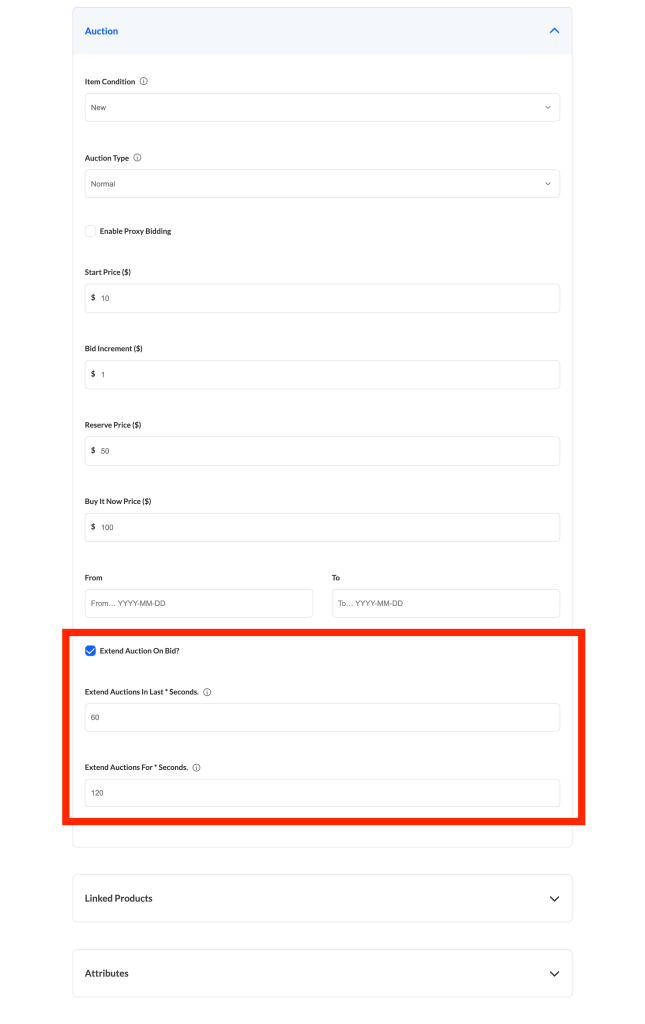
The closing rule is the single most consequential setting in the whole event. At the closing time, the highest sealed bid wins. What happens to a bid placed one second before that time is what causes arguments.
Most fundraisers close on a hard deadline. Others extend the closing time by a few minutes whenever a late bid arrives, so no one can win by timing rather than value.
Payment and fulfillment
Winners are notified and pay, and then somebody has to hand over the goods. The gap between “won” and “paid” is where fundraising auctions leak money, particularly when payment is handled manually via email after the event.
Collecting payment at the point of winning, rather than chasing invoices afterward, closes most of that gap. Fulfillment then splits into in-person collection, posting, or an experience redeemed later, and each requires a different message to the winner.
Running One With Multiple Donors Or Sellers
The multi-donor case is where most advice on running a silent auction online stops being useful. When twenty supporters each donate an item, someone has to collect twenty descriptions, twenty photos, and twenty sets of collection details, and then key it all in.
That coordination work is usually invisible in the planning and enormous in practice. It is also the part that repeats every year, which is why the same committees dread the same fortnight annually.
The money involved justifies taking it seriously. According to Giving USA, researched by the Indiana University Lilly Family School of Philanthropy, total charitable giving in the United States reached $617.20 billion in 2025, passing $600 billion for the first time. Individual donors accounted for an estimated $394.2 billion of that, roughly 64% of the total, which is why events built around individual supporters giving directly still matter so much to smaller organizations.
One thing we commonly see: Organizers budget carefully for the event and not at all for the admin around it. A committee running a fifty-lot auction will spend more volunteer hours chasing item descriptions and photos over email than they spend on the auction night itself. The fix is almost always the same, which is to stop being the middle person and let each donor enter their own lot.
Letting each donor manage their own listing changes the shape of the job. Instead of one coordinator with a spreadsheet and an inbox, each contributor adds their own item, writes their own description, uploads their own photo, and sees their own results. The coordinator approves rather than transcribes.
This matters beyond convenience. Donor-entered listings are usually better, because the person who owns the item knows its condition and its story. A description written by a volunteer working from a one-line email is thinner than one written by the person donating the hamper.
There is a second benefit for organizations that regularly run auctions. Once a contributor has an account and has listed once, the second year costs them almost nothing, and the organization keeps the record of who donated what. If you are still deciding what to ask supporters for, our list of auction item ideas is a useful starting point.
Auction Formats, Bid Increments And Closing Rules
Silent is one of three formats you are likely to consider when planning a silent auction online, and the right one depends on how many lots you have and whether your audience is in a room.
Here is how the three compare:
| Format | How bids are seen | Closes | Best for |
|---|---|---|---|
| Silent / sealed | Hidden until close | Fixed time | Fundraisers, multiple lots |
| Live | Visible, ascending | Auctioneer closes | Single high-value lots |
| Timed online | Visible, ascending | Fixed time plus extend | Ongoing marketplace auctions |
How opening bids and increments shape behavior
A bid increment is the minimum amount by which a new bid must exceed the current one. In an ascending auction, the increment controls pace: a large increment moves the price quickly and discourages casual bidders, while a small one produces a long ladder of tiny raises.
In a true sealed auction, the increment matters far less, because bidders are not responding to each other’s numbers. What matters instead is the opening bid, since that is the only price signal anyone gets. Treat the opening bid as your anchor and set it at roughly a third to a half of what you believe the item will fetch.
Increment theory is worth knowing because it explains why ascending formats behave the way they do. It is not a setting you should assume exists in any particular tool, so check what your own setup actually supports before promising a committee anything specific.
What a closing rule does
A closing rule decides who wins when bids arrive near the deadline. A hard close is simplest to explain and easiest to argue about afterward. An extending close, sometimes called anti-sniping, pushes the end time out whenever a late bid lands, so the lot only closes once bidding genuinely stops.
For charity auctions, the extending close is usually fairer, because the point is to raise the most money rather than to reward the fastest connection. For a marketplace running continuous auctions, a hard close is easier to operate at volume.
If your ambitions run past a single event, the wider question of how to build an auction website covers the infrastructure side. The costs involved, including what platforms and payment processors take, are set out in our breakdown of auction fees.
Hosted Platform Or Your Own Site?
For a one-off silent auction online, a hosted fundraising platform is usually the right answer, and it would be dishonest to tell you otherwise. Those tools exist for exactly this job; several offer free tiers for registered nonprofits, and you can be live in an afternoon without touching a server.
Choose a hosted platform when the auction is an annual event, when nobody on the committee maintains a website, and when you need mobile bidding and text notifications out of the box. The trade-offs are that you work within their templates, the event lives on their domain, and your supporter data sits in their system.
Running the auction on your own site makes sense under a narrower set of conditions:
- You already run a WooCommerce site. The auction becomes part of a store you maintain anyway, rather than a second system to learn.
- Auctions are a regular fixture for you. Setup cost is paid once and reused, which changes the arithmetic against per-event pricing.
- You want the donor and bidder records. Everything stays in your own database, and the relationship is yours to build on.
- Many contributors will manage their own lots. This is the case hosted event tools handle least well.
- The auction sits alongside other selling. Merchandise, memberships, and tickets can live on the same site.
If none of those apply, use a hosted tool and spend the saved time on the event. There is no prize for self-hosting.
Setting It Up With WC Vendors Simple Auctions
Before any setup steps, it is worth clarifying what this stack is, because the naming is confusing.
We do not ship a standalone auction engine. Auctions are provided by WooCommerce Simple Auctions, a separate plugin that adds auction functionality to WooCommerce. What WC Vendors Simple Auctions provides is an integration that lets those auctions work with WC Vendors Pro, so individual contributors can create and manage auction lots from their own dashboard rather than everything running through a single site administrator.
So the stack is three parts: WooCommerce for the store, WooCommerce Simple Auctions for the auction mechanics, and WC Vendors Pro plus our integration for the multi-contributor layer. You need all three. If only one person will ever list items, you do not need the third, and Simple Auctions alone will do.
Sealed bidding is supported, which makes the silent format possible rather than just a timed ascending auction with prices shown.
The multi-contributor part is the piece worth the setup effort. Each donor gets a frontend dashboard where they can add their own products, edit them, and view their orders, without an administrator account or access to anyone else’s items. Commission can be taken per sale, so an organization running an auction on behalf of contributing sellers can retain a percentage automatically rather than reconciling it afterward.
Registered nonprofits should review the WC Vendors Non-Profit License before purchasing, as the licensing terms for charitable organizations differ from standard terms.
Setting up a silent auction online with this stack runs in roughly this order:
- Install WooCommerce and configure a payment gateway that suits your donors.
- Add WooCommerce Simple Auctions and set your auction defaults, including whether bids are sealed.
- Install WC Vendors Pro and the Simple Auctions integration, then enable auction products for contributors.
- Invite contributors, approve their accounts, and let them list their own lots.
- Run a full test lot end-to-end, bidding from a second account, before you invite a single donor.
That last step is the one people skip. Bid on your own auction from a different account and browser, let it close, then pay the invoice. Every problem you find that way is one you do not find publicly during the event.
Choosing The Right Setup For Your Silent Auction
The thing worth remembering about a silent auction online is that the format is the easy part. Sealed bidding, a closing time, and a payment step are straightforward to describe and straightforward to configure. What determines whether the event runs smoothly is the coordination around it, and that is the part that scales badly when one person is doing it for everybody.
So be honest about which case you are in. If this is a once-a-year event and someone else can host it, let them. If you are running a silent auction online repeatedly, with many contributors, on a site you already maintain, owning the setup starts to pay for itself.
Here is what we covered in this article:
- What a silent auction is
- How a silent auction online works end to end
- Running one with multiple donors or sellers
- Auction formats, bid increments, and closing rules
- Hosted platform or your own site
- Setting it up with WC Vendors Simple Auctions
If you run a silent auction online more than once and want your contributors managing their own lots, take a look at what WC Vendors Simple Auctions adds on top of WooCommerce Simple Auctions, and check the non-profit licensing if you are a registered charity.
Frequently Asked Questions
How long should a silent auction online run?
A silent auction online usually runs between three and seven days. Shorter than three days and supporters who check in weekly never see it. Run it longer than about ten days and urgency disappears, with most bids arriving in the final day regardless of how long the window was.
Should bidders see the current highest bid?
Not in a true silent auction. Hiding bid amounts is the defining feature of the format, and showing them turns the event into a timed ascending auction. Showing the number of bids without the amounts is a reasonable middle ground, since it signals interest without triggering competitive bidding.
What happens if someone bids in the last few seconds?
That depends entirely on your closing rule. With a hard close, the last valid bid before the deadline wins. With an extending close, the deadline moves out by a set period each time a late bid arrives, so the lot only ends when bidding actually stops.
Can multiple donors manage their own auction items?
Yes, but not with auction functionality alone. A standard auction plugin assumes one seller, so every listing goes through a site administrator. Adding a multi-vendor layer such as WC Vendors Pro gives each contributor their own dashboard to create and manage their own lots.
Do we need to charge sales tax on auction items?
This depends on your jurisdiction, the nature of the item, and your organization’s tax status, and it is genuinely worth asking an accountant rather than guessing. Charitable auctions are treated differently in different countries, and the line between a donation and a purchase is not always where people assume it is.
Is a hosted platform cheaper than running it ourselves?
For a single annual event, usually yes, especially given the free nonprofit tiers several hosted platforms offer. The arithmetic changes when you run auctions repeatedly, need contributors managing their own lots, or already maintain a WooCommerce site for other selling.