
You are shortlisting plugins for a multi-vendor store, and a WPFactory alternative is on your list. Before you compare a single feature table, one fact about their catalog today changes the question you should be asking.
Here’s your answer: WC Vendors Pro. When you look for a WPFactory alternative to run a multi-vendor store, your choice is between a marketplace pieced together from general store plugins and a product line built only for marketplaces.
What WPFactory Sells, And What WC Vendors Sells
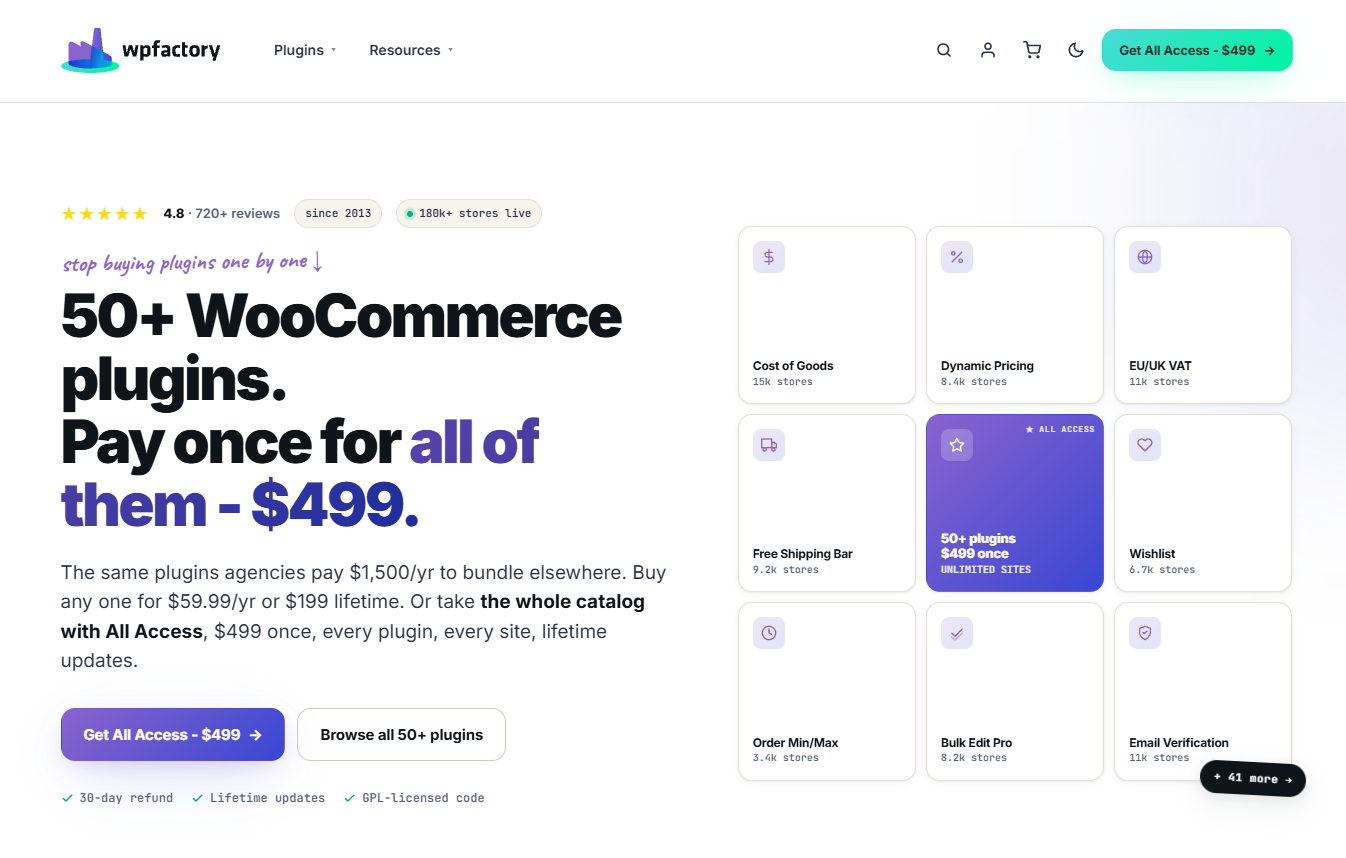
WPFactory sells a wide catalog of single-purpose WooCommerce plugins. Their catalog is broad and, for single-store problems, genuinely useful. Their own site describes more than fifty plugins across 180,000-plus stores, covering cost-of-goods tracking, EU VAT, conditional shipping, PDF invoices, and quantity rules. That breadth is the point of the company, and it is also the limit for you. None of it was written for a store where somebody other than you is doing the selling.
If you came for a marketplace, that is where it stops. Their catalog held no marketplace or multi-vendor plugin. The product sitemap listed 57 items, and none of them were applicable for long-term marketplace products.
If you want a WPFactory alternative to run a multi-vendor store, you are not replacing something they sell you today. You are choosing what to use instead of a general catalog with no marketplace entry left in it.
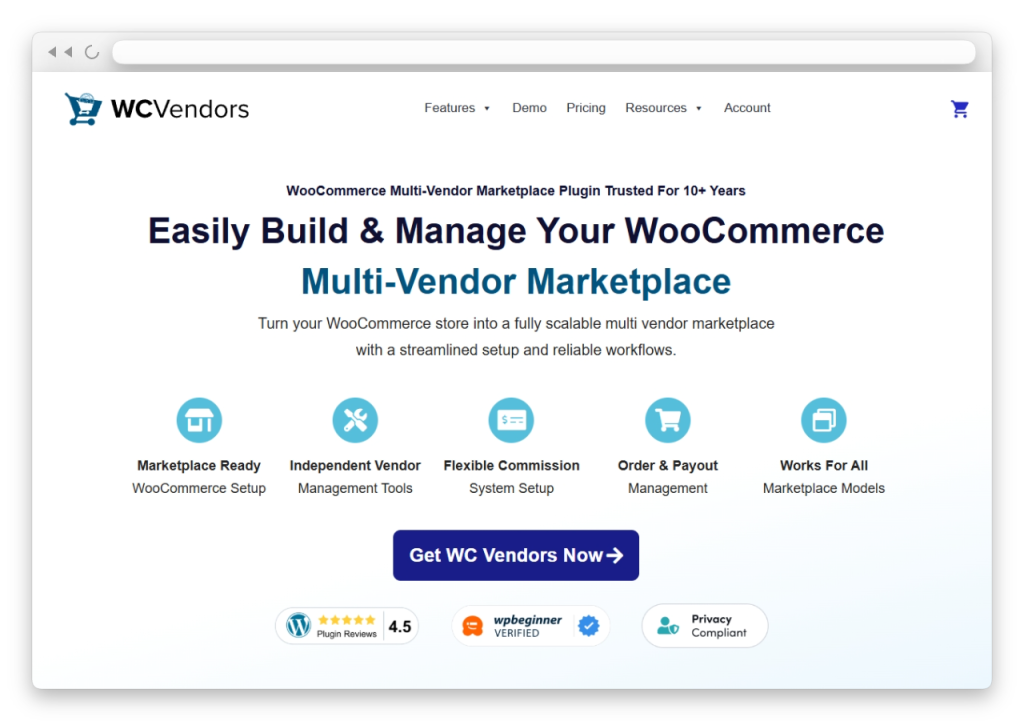
On the other hand, the free WC Vendors plugin covers the basics. WC Vendors Pro adds what a working marketplace needs: a frontend dashboard for vendors, global commission handling, the WC Vendors Stripe Connect gateway, flat rate and table rate vendor shipping, vendor coupons and per-vendor reports. Each one is there because a marketplace like yours needs it.
The plugin market is crowded for a reason. According to W3Techs, WooCommerce powers 48.2% of all e-commerce systems in their surveys as of 13 August 2026. A platform that big attracts very large plugin catalogs, and a big catalog is not the same as depth in any one corner of it.
How Each Vendor Model Actually Works
The two models split on one question: who owns the selling. A marketplace product gives every vendor their own store. A general store plugin assumes one seller, and that seller is you.
Vendors on WC Vendors Pro run their own storefront
The frontend dashboard shows up right away in testing. I set up a second account as a vendor, and that account never touched wp-admin. Products, orders, coupons, and shipping were all handled from the front end, under the vendor’s own login.
That sounds cosmetic until you onboard a real seller. You are asking a small business to list stock, not to learn WordPress.
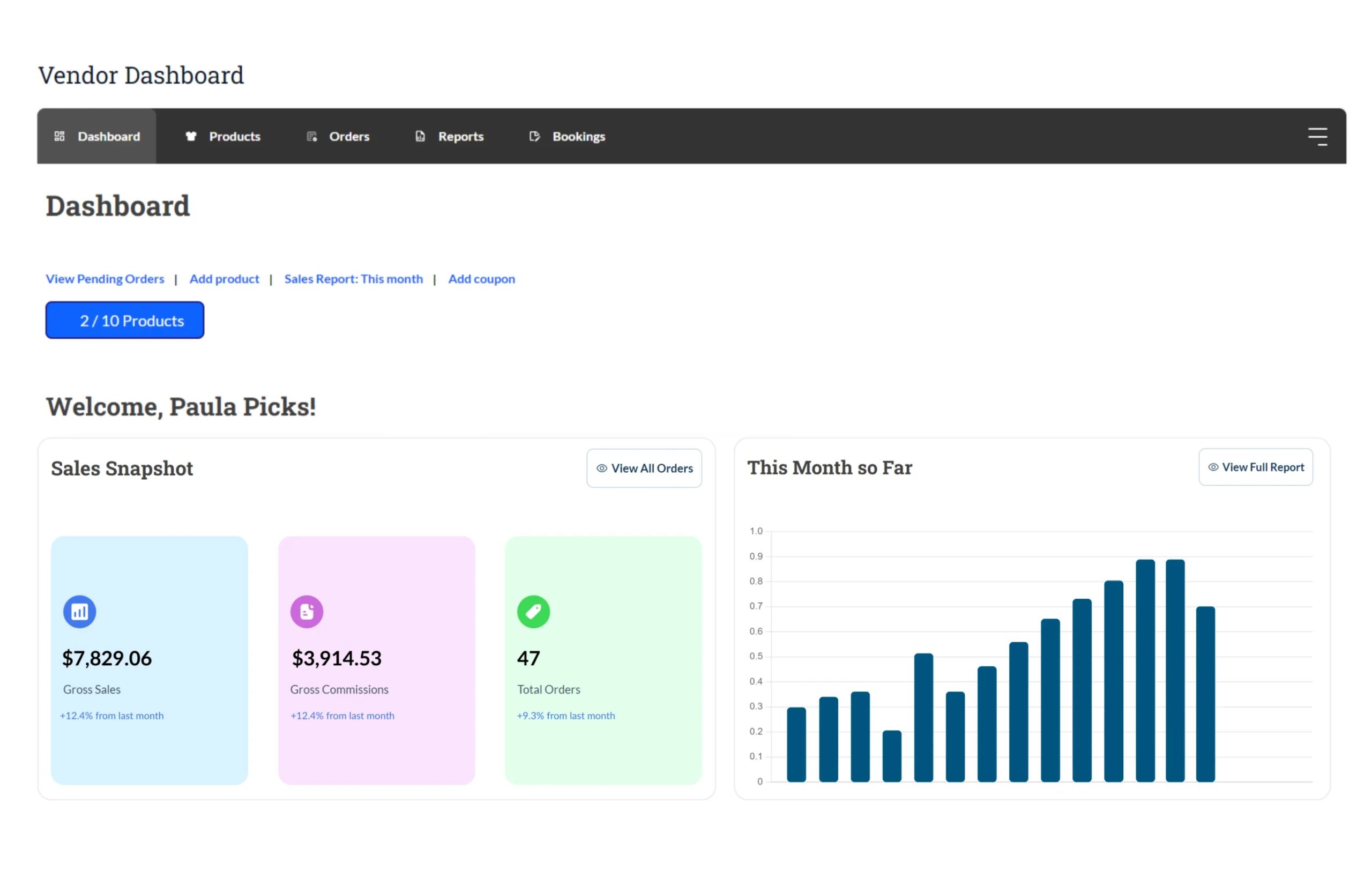
Order visibility works the same way. Each vendor sees their own orders, and nobody else’s.
Commission is the second thing worth flagging. You pick the commission type first, whether percentage or fixed. Then you decide whether to add a fee on top, which comes out of the vendor’s share and goes to you as the marketplace.
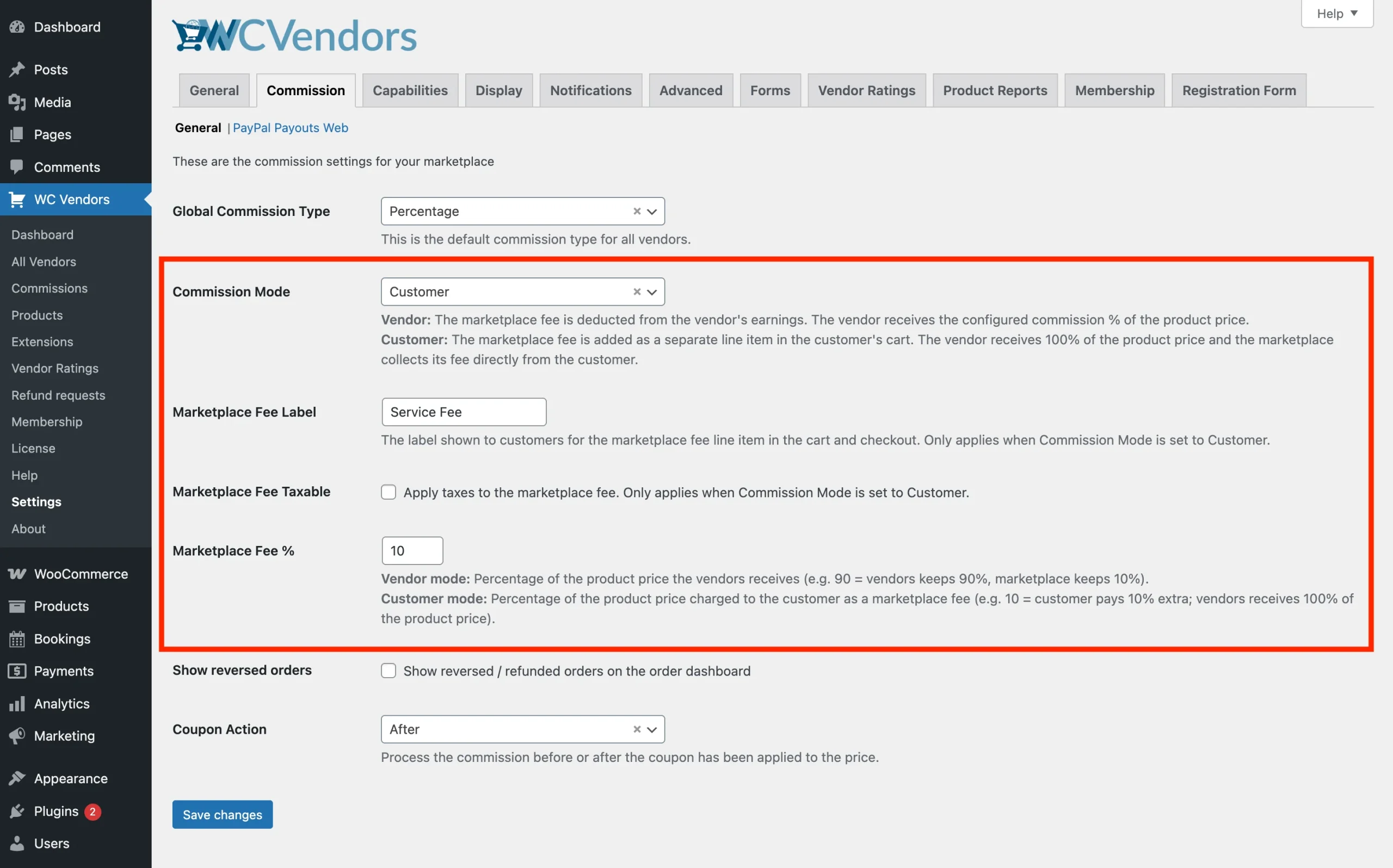
Be precise about your tiering, too. The entry Pro tier gives you the four standard commission types, fixed, fixed plus fee, percentage, and percentage plus fee, alongside three tiered types: Sales By Vendor, Sales by Product, and Product Price. You can set commission at the product, vendor, or marketplace level, so a rate that scales with a seller’s volume doesn’t require a higher plan. Plan-based commission is a separate mechanism, tied to vendor memberships further up the ladder.
Specialization Versus Catalog Breadth
Specialization buys defaults that already assume vendors, and on a marketplace build that beats breadth. Breadth buys cover for many unrelated store problems, which is a different purchase from yours. Choosing a WPFactory alternative comes down to which of those two you actually need.
Multi-seller trade is not a fringe pattern a general plugin can treat as an edge case. According to Eurostat, in 2024 some 45% of EU enterprises with web sales sold through an e-commerce marketplace. Another 85.65% sold through their own website or apps. A normal channel deserves tools built for it.
One thing we commonly see: A store owner builds a marketplace out of general plugins, then finds the pieces were made for a single-seller shop. Emails reach the site owner instead of the seller who needs to act. Reports total the whole store, not each vendor. Tax and shipping apply globally when they needed to differ per seller. Nothing looks broken, and nobody’s numbers add up.
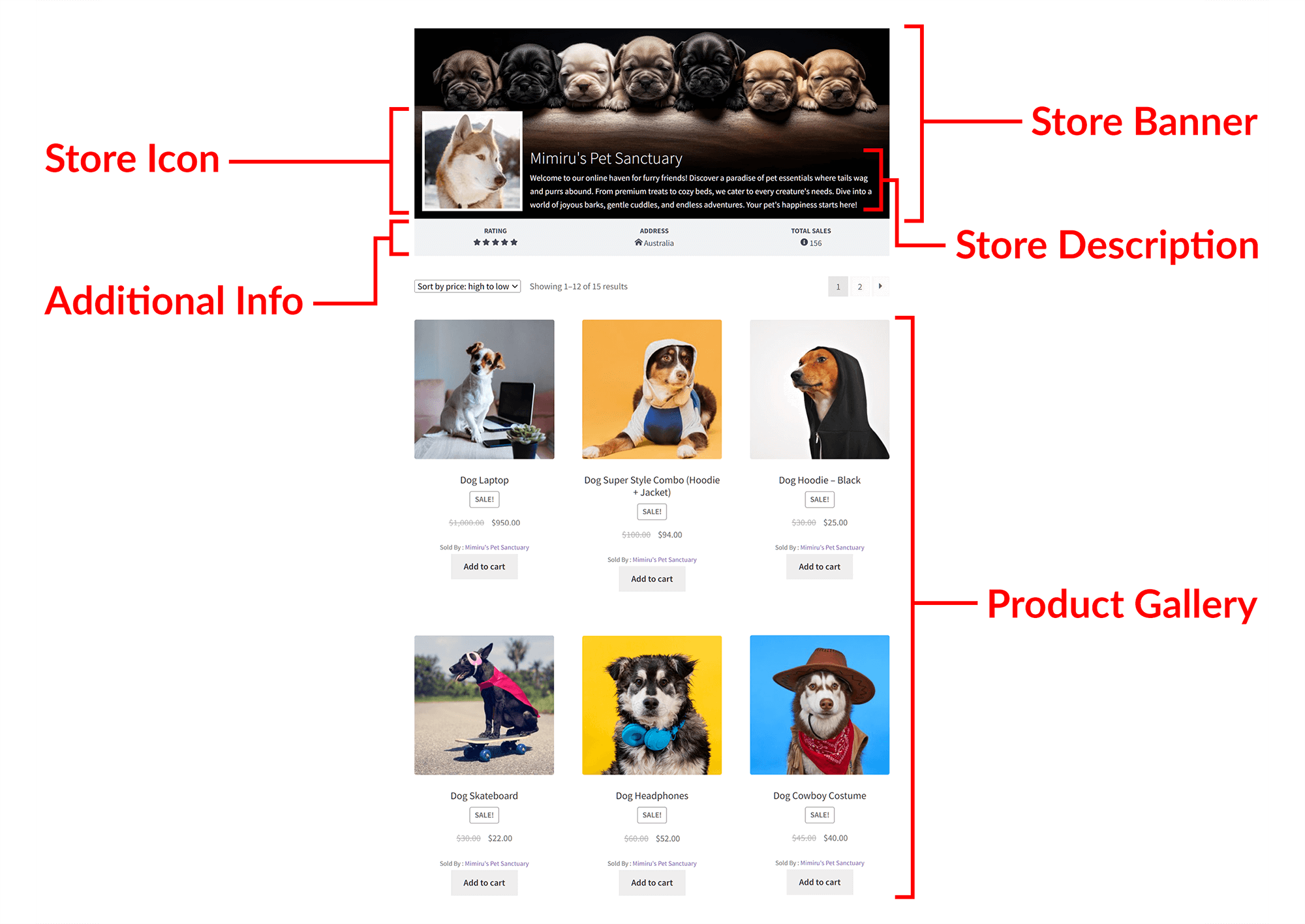
Small things give it away, and vendor branding is one. A specialized product assumes each seller wants their own shop identity. Banners, logos, and social links belong to the vendor, not to your site.
Feature Comparison For Marketplace Owners
Here is the comparison on the criteria that decide your marketplace build. Use it as your WPFactory alternative scorecard.
| What a marketplace needs | WC Vendors Pro | WPFactory |
|---|---|---|
| A marketplace product you can buy today | Yes, a marketplace-only product line | No marketplace plugin among the 57 items in their product sitemap |
| Vendors managing their own store from the front end | Included at the Pro tier | Their own docs treat vendor dashboards as another plugin’s job |
| Automatic commission per sale | Seven standard commission types plus three tiered types, with an optional added fee | Their roundup entry described percentage or fixed values |
| Vendor payouts | WC Vendors Stripe Connect gateway included at the Pro tier | Not published in their current catalog |
| License | Annual, one domain plus one staging site | $59.99 a year per plugin, $199 once, or $499 once for all fifty-plus |
Payouts deserve more than a table row, because they are where your marketplace gets stuck. Stripe Connect payouts are part of the Pro tier, so commission is taken and the vendor’s share moves without a monthly spreadsheet. Test that flow before your launch, and our guide to testing Stripe marketplace payments walks you through it.
Your commission strategy is a decision, not a checkbox, and our guide to charging vendors commissions covers how you can do it right. Settle currency early too, since a multi-currency WooCommerce marketplace changes how your payouts and reports behave.
Pricing And Add-On Costs
On headline license terms WPFactory is cheaper, and it is worth stating plainly: $59.99 a year for one plugin, $199 once for a lifetime license on unlimited sites, or $499 once for an all-access bundle covering every plugin they have shipped and will ship.
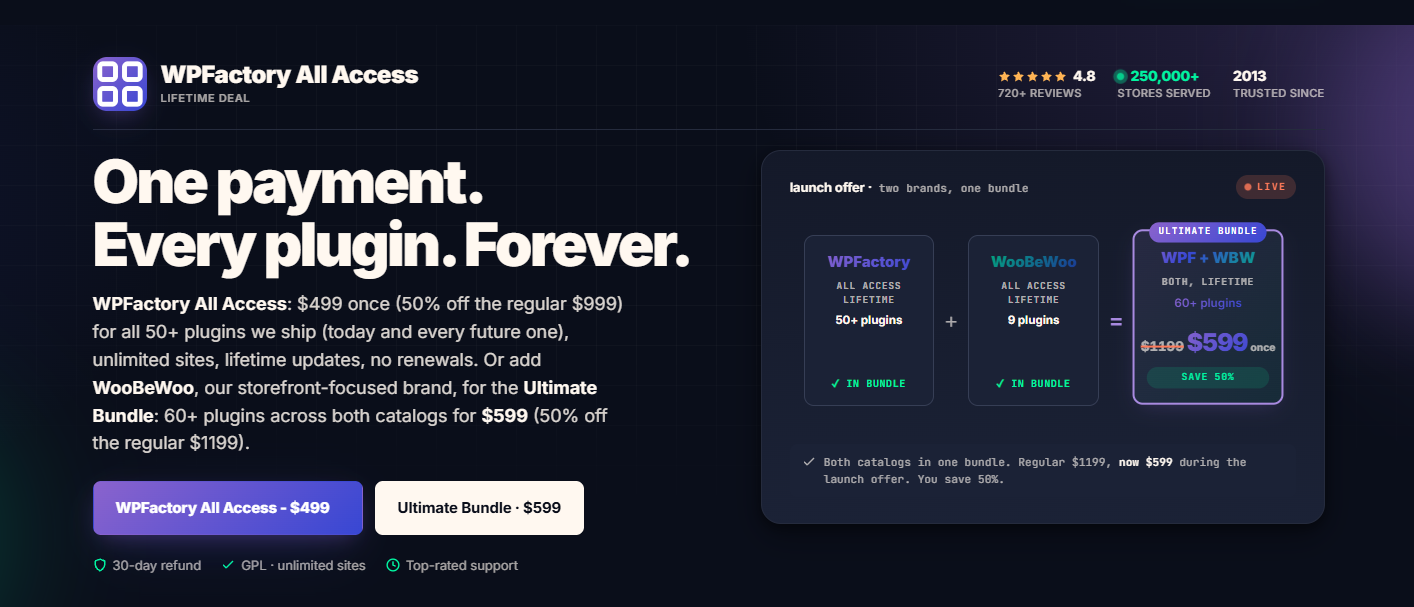
Your marketplace is one site, so an unlimited-site license discounts something you do not need. None of those plugins build a marketplace either, so the cheapest license on the page still leaves you without the thing you came for. A lower price on the wrong product is not a saving, which is the trap a WPFactory alternative has to avoid.
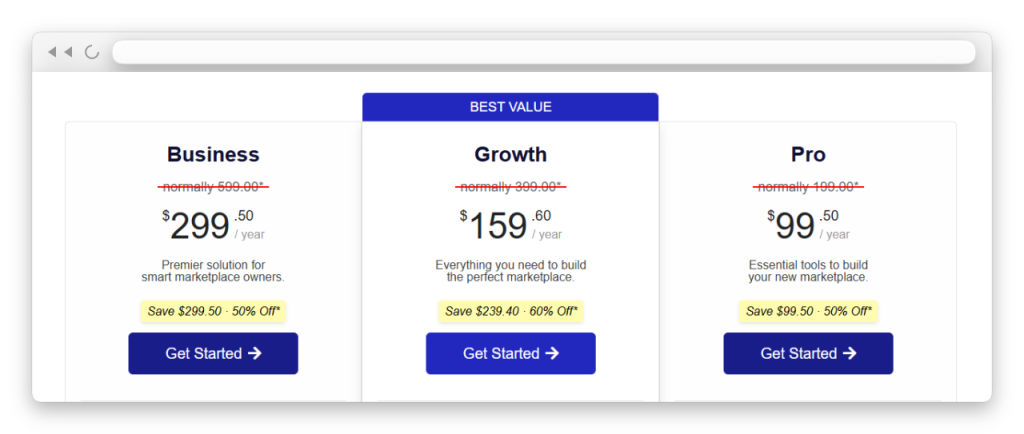
WC Vendors Pro is $99.50. Your license covers one domain plus one staging site, so you can run a real order end to end before a vendor ever sees it, and there is no multisite option. Set that against what a marketplace actually costs you when it is assembled from parts: the support replies, the manual payout spreadsheets, the reports that answer the wrong question. Three tiers sit on the ladder, so check WC Vendors pricing against the marketplace you intend to run.
Support And Long-Term Maintenance
Support on a marketplace is a different job from support on a store. Money moves between three parties.
A catalog desk covers dozens of unrelated plugins, so its first reply to your payout question is often a request for detail about a case it sees rarely. A marketplace desk has met your problem before, because every ticket involves vendors, commission, and payouts.
Maintenance works the same way. Your annual license covers updates, downloads, and support, and if you let it lapse, you keep the version you already have while updates stop. What you are paying for is a compatibility promise on the one workflow you cannot afford to break, because WooCommerce keeps changing and somebody has to keep the marketplace layer current with it. That promise is the quiet reason a specialized WPFactory alternative outlasts a general catalog.
How To Choose A WPFactory Alternative
Choose the tool whose defaults already match your marketplace, and treat the rest as secondary. On that test, WC Vendors Pro is where a WPFactory alternative search should start, and the checklist below confirms it against your store.
- A vendor dashboard on the front end. Anything that puts sellers in wp-admin costs you support time forever.
- Commission handled at the platform level. Your split should be taken per sale, with a clear rule on whether an added fee comes from the vendor’s share.
- Payouts you can test before launch. Run a full order end-to-end from a second account, and pay it, before a real vendor signs up.
- Per-vendor reporting. Store totals are useless when three of your sellers need three sets of numbers.
- Shipping each vendor controls. Sellers ship from different places at different costs, so rates belong with the vendor, not with you.
The stakes justify that care. According to the US Census Bureau, e-commerce made up 16.8% of total US retail sales in the first quarter of 2026, worth about $302.3 billion on a not-adjusted basis. A marketplace running on plugins that assume one seller leaks your money quietly on every order.
For the wider field instead of a single head-to-head, our roundup of the best WooCommerce multi-vendor plugin options covers the dedicated tools side by side.
Why WC Vendors Pro Is The Right WPFactory Alternative
The cost that decides a marketplace build is rarely the license. It is the cost of pieces that were never written for vendors, paid by you in support replies, manual payout spreadsheets, and reports that answer the wrong question. That bill arrives monthly and never shows up on a pricing page.
WC Vendors Pro is the WPFactory alternative to choose because marketplaces are the whole product here, not one row in a catalog. That is what you get: sellers onboarded without WordPress logins, commission taken per sale, and payouts running through Stripe Connect from the first tier. When your shortlist started with a WPFactory alternative and ended with a catalog that no longer sells a marketplace, the honest recommendation is to start where the defaults already assume vendors. Take a look at what WC Vendors Pro includes at the entry tier, then check the tier ladder against the marketplace you plan to run.
Here’s what we covered in this article:
- What WPFactory sells, and what WC Vendors sells
- How each vendor model actually works
- Specialization versus catalog breadth
- Feature comparison for marketplace owners
- Pricing and add-on costs
- Support and long-term maintenance
- How to choose a WPFactory alternative
Frequently Asked Questions
Does WPFactory sell a marketplace plugin?
Not in their current catalog. Their product sitemap listed 57 items with no marketplace or multi-vendor plugin among them, and the old product URL now redirects to their homepage. Their own roundup of marketplace plugins still includes a section for it, linking six other WPFactory plugins but not that one. They do still publish a roundup of other companies’ marketplace plugins, which is what most buyers find first.
Can I build a marketplace from general-purpose WooCommerce plugins?
Partly, and it usually costs you more than it saves. General plugins assume one seller, so alerts route to the site owner, reports total the whole store, and settings apply globally where they need to differ per vendor. WPFactory’s own troubleshooting docs describe that pattern for one of their plugins. A dedicated marketplace product starts from the assumption you actually have, which is why a purpose-built WPFactory alternative is the safer path.
How much does WC Vendors Pro cost?
WC Vendors Pro is $99.50. Your license covers one domain and one staging site, and multisite licenses aren’t offered. Two higher tiers add more capability, so compare all three before committing to the entry tier.
Do vendors need a WordPress admin account?
No. Vendors work from the WC Vendors Pro frontend dashboard with their own login, where they add products, handle orders, create coupons, and set shipping. Keeping sellers out of wp-admin is both a security choice and a support choice for you, since a seller who never sees the WordPress admin never needs help finding their way around it.